
Well pumps rarely die without warning. They struggle first, and the household quietly adapts — showers get shorter, somebody learns not to run the dishwasher during laundry, the pressure gauge nobody looks at drifts lower every month. Then one morning there is no water, and it feels sudden.
This article is about the weeks before that morning, when the signs your well pump is going bad are still small enough to act on. The U.S. EPA’s guidance for private well owners makes the same point: the owner is responsible for spotting problems early. If you are already at no water, go straight to what to check when the well pump is not working.
8 signs your well pump is going bad
| 1. Pressure that wanders | Strong then weak in the same shower. Most often a tank losing its air charge. Sometimes a pump losing capacity. |
| 2. Pump clicking on and off | Short cycling. Rarely the pump’s fault, but it is the thing most likely to kill it. Act on it quickly. |
| 3. Pump running longer than it used to | Takes noticeably longer to reach cut-out pressure. Worn impellers, a leak, or a falling water level. |
| 4. Air spitting from taps | The pump is drawing air: water level near the intake, a cracked drop pipe, or a failing check valve. |
| 5. Sand, grit or cloudiness | Sediment being pulled in. Wears the pump from the inside and clogs everything downstream. |
| 6. A higher electric bill | With no change in household use. The pump is running more, starting more, or drawing more current. |
| 7. The breaker trips occasionally | A motor starting to draw too much current, or wiring breaking down. Never a thing to reset repeatedly. |
| 8. New noises | Humming without starting, rapid clicking at the switch, grinding from a jet pump. Each points somewhere different. |
Which signs actually mean the pump
This is the part most “signs your pump is failing” lists skip. Several of the symptoms above are produced far more often by something other than the pump.
Usually not the pump
- Short cycling. Almost always a waterlogged pressure tank or a pressure switch problem. The pump is the victim, not the cause — see why a pump keeps turning on and off.
- Wandering pressure. Same story. Check the tank’s air charge before anything else.
- Humming but not starting. On a three-wire submersible, very often a failed capacitor or relay in the control box, above ground.
Could be the pump, could be the well
- Air in the water, sand, and longer run times all appear when the pump is wearing out — and also when the water level in the well is dropping. After the record-dry stretch Upstate South Carolina went through from late 2025 into 2026, we have seen plenty of healthy pumps blamed for a well that simply had less water in it. A flow and yield test separates the two.
Most likely the pump
- Current draw well outside the motor’s rating, measured at the control box or switch.
- Healthy tank, correct switch, adequate water level, and still low output. That combination leaves worn impellers or a tired motor as the explanation.
- Age. A submersible past twelve to fifteen years showing two or more of the signs above is on borrowed time. More on that in how long a well pump lasts.
The pump is the last thing on the list, not the first. A company that hears “low pressure” and quotes a new pump without checking the tank, the switch and the water level is guessing — and the guess happens to be the most expensive answer.
A ten-minute check for signs your well pump is going bad
Nothing here requires opening anything electrical.
- Watch the pressure gauge through one full cycle. Open a tap and note the pressure where the pump kicks on and where it shuts off. On most homes that is 30/50 or 40/60 psi. A cut-off that no longer reaches its number is worth reporting.
- Time the cycle. With one tap running at a steady rate, the pump should run for at least a minute or so before stopping. Seconds means short cycling.
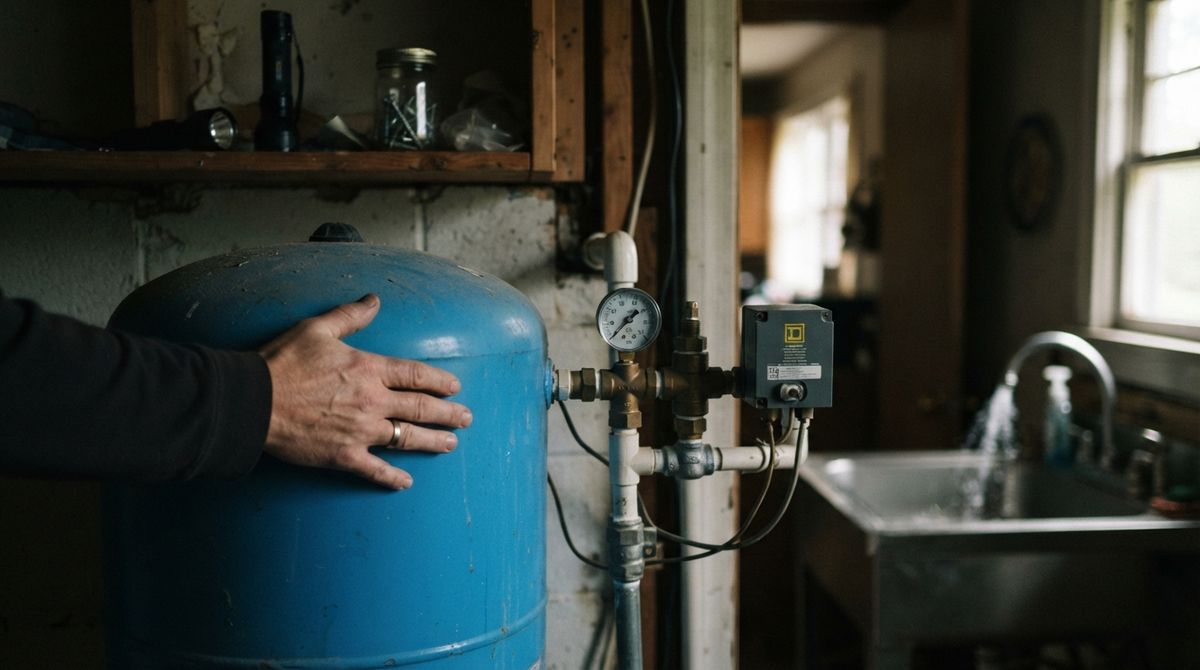
- Tap the tank. Knock on the side from top to bottom. The top third should sound hollow. Solid all the way up means waterlogged.
- Fill a clear glass jar. Let it stand for an hour. Sediment settling at the bottom is worth mentioning.
- Look at the power bill. Compare this month with the same month last year.
Write the numbers down. Readings you can hand to a technician save diagnostic time and tell them immediately where to look.
Why acting early matters so much
Most of the early signs lead to the same place: more motor starts. A pump that starts ten times as often wears out many times faster, and every one of those starts heats the windings and stresses the switch contacts.
That means the cheap fix — recharging a tank, adjusting a switch, replacing a check valve — also protects the expensive part. Leave it, and the cheap fault becomes the cause of an expensive one.
When the signs add up: repair or replace?
One warning sign on its own rarely means a new pump. What changes the answer is how many of the signs your well pump is going bad show up together, how old the pump is, and what the tests find once the tank, switch and water level have been ruled out.
| Repair usually makes sense | The pump is under ten years old, the fault traces to the tank, switch, control box or a check valve, and output is normal once that part is fixed. |
| Replacement is worth pricing | The pump is past twelve years, two or more signs persist after the surface parts check out, and the motor’s current draw is outside its rating. |
| Neither, yet | The pump tests fine but the water level is falling. The fix is managing the well, not changing the pump. |
If replacement is on the table, read what a well pump replacement quote should include before comparing prices. The pull is the expensive part of the job, so it pays to replace the cheap wear parts while the pump is out of the ground.
Where we work
Well pump diagnosis across Upstate South Carolina
| ✓Anderson | ✓Greer |
| ✓Taylors | ✓Mauldin |
| ✓Simpsonville | ✓Fountain Inn |
| ✓Travelers Rest | ✓Easley |
What to remember
| 1 | Pumps warn before they fail. The first signs your well pump is going bad are wandering pressure and longer run times. |
| 2 | Most warnings are not the pump. Tank, switch and control box come first. |
| 3 | A dry year looks like a dying pump. Air and sand can mean a falling water level, not worn parts. |
| 4 | Write the readings down. Cut-in, cut-out and cycle time are worth more than a description. |
| 5 | Early fixes protect the pump. Every cheap fault left alone adds motor starts. |
Frequently asked questions
What are the first signs your well pump is going bad?
Pressure that wanders during use, the pump taking longer to refill the tank, air spitting from taps, sediment in the water and an unexplained rise in the electric bill. These usually appear weeks or months before the pump stops altogether.
Can a well pump fail suddenly with no warning?
It can, usually from a lightning strike, a power surge or a sudden electrical fault. But most pump failures follow a period of warning signs that went unnoticed or were put down to something else.
Does low water pressure mean my well pump is bad?
Usually not. Low pressure is far more often a waterlogged tank, a pressure switch setting or a clogged filter. The pump is worth suspecting only after those have been ruled out.
Why is my well pump running more than usual?
A leak somewhere in the system, a check valve letting water drain back, a falling water level in the well, or a worn pump that moves less water per minute. A flow test tells you which.
Can a bad pressure tank damage my well pump?
Yes. A tank that has lost its air charge makes the pump start far more often than it should, and frequent starting is the main thing that shortens a pump’s life.
How old is too old for a well pump?
Submersibles commonly last eight to fifteen years and jet pumps around ten, depending on how often they start and the water they handle. Age alone is not a reason to replace, but an older pump showing several warning signs deserves a proper test.
Should I wait until the pump fails completely?
It is rarely the cheaper option. Many warning signs come from inexpensive faults that are actively wearing the pump out. Fixing them early often adds years to the pump’s life.
Seeing signs your well pump is going bad?
Find out what it means before it gets expensive
We test the tank, switch, control box, wiring, water level and pump, and tell you plainly which one is causing the symptom — with a fixed price in writing before any work starts.
Open 7am–9pm, seven days · No call-out fee with a repair · Fixed price agreed in writing
See what a full diagnosis covers on our well pump repair page. If the pump is confirmed worn out, read repair or replace before deciding.