Skip links
Jet Pumps

Jet Pump Repair

Jet pump repair is usually a same-visit job. The pump sits above ground, in a basement, crawl space or well house, where it can actually be reached, and that access is its great advantage.

✓ Usually a same-visit repair    ✓ Shallow and convertible systems    ✓ No charge for the drive

Get a Free Quote

Rather not call? Send this and we’ll get back to you fast.

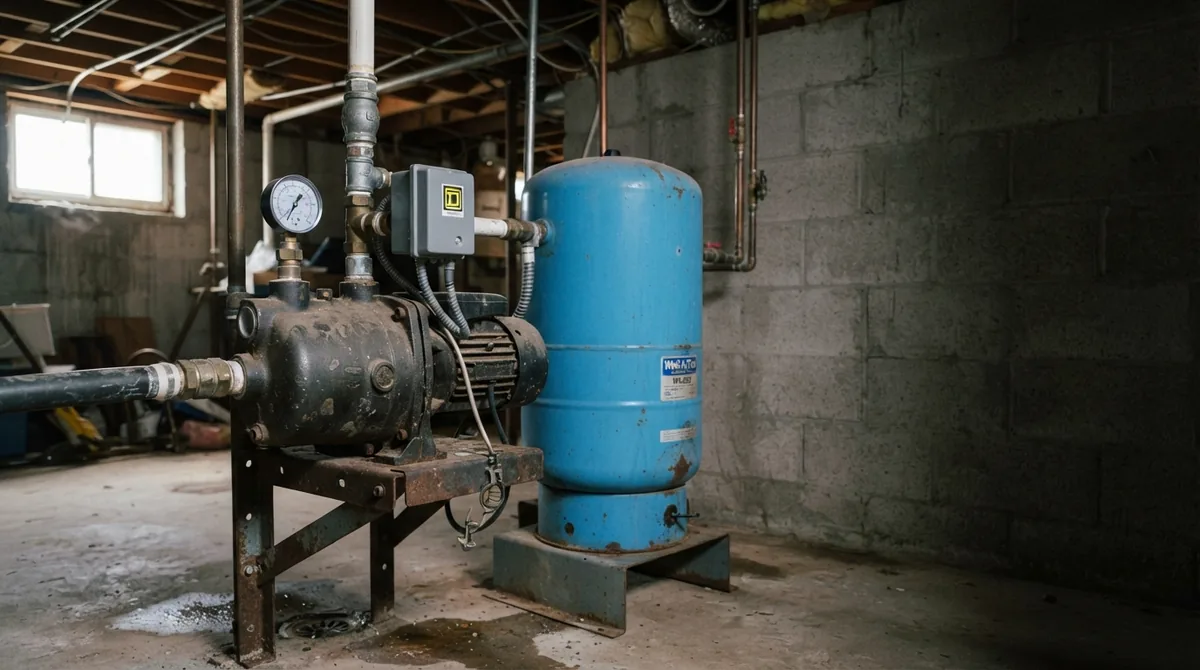
    Jet pump repair, pump and pressure tank in a residential basement
    1-3 hrsTypical repair

    Start here

    The Pump You Can Actually Reach

    A jet pump pulls water up rather than pushing it. It creates suction at the surface and draws the water to itself, which is a completely different mechanism from a submersible sitting down in the water.

    That difference decides how these systems fail. Suction depends on an airtight path all the way down to the water, so almost every jet pump fault traces back to air getting in where it should not.

    • Loses prime overnight — usually a failed foot valve letting the suction line drain back.
    • Runs but pushes no water — lost prime, a blocked suction line, or a water level that has dropped below draw.
    • Noisy, rattling or surging — cavitation from air in the line or a restricted intake.
    • Weak pressure that never recovers — a worn impeller or diffuser, both of which lose efficiency gradually.
    • Short cycles or will not hold pressure — often the tank or switch rather than the pump itself.

    Where the symptoms point at pressure rather than supply, water flow and pressure testing separates the two. See also the full well pump repair process.

    What We Check on a Jet Pump Repair Callout

    Because everything is above ground, jet pump repair starts with a proper test in about an hour. The parts that fail are well known, and most of them are inexpensive.

    Prime and foot valve

    The foot valve at the bottom of the suction line holds water in the pipe when the pump stops. When it fails, the pump loses prime and runs dry.

    Impeller and diffuser

    Worn or scaled impellers cost you pressure quietly, over years. This is the fault people most often mistake for a well running low.

    Suction line and fittings

    A pinhole or a loose joint on the suction side lets air in without ever leaking water out, which makes it easy to miss.

    Seals, bearings and motor

    Leaking shaft seals, dry bearings and failing start capacitors all produce noise or heat before they stop the pump entirely.
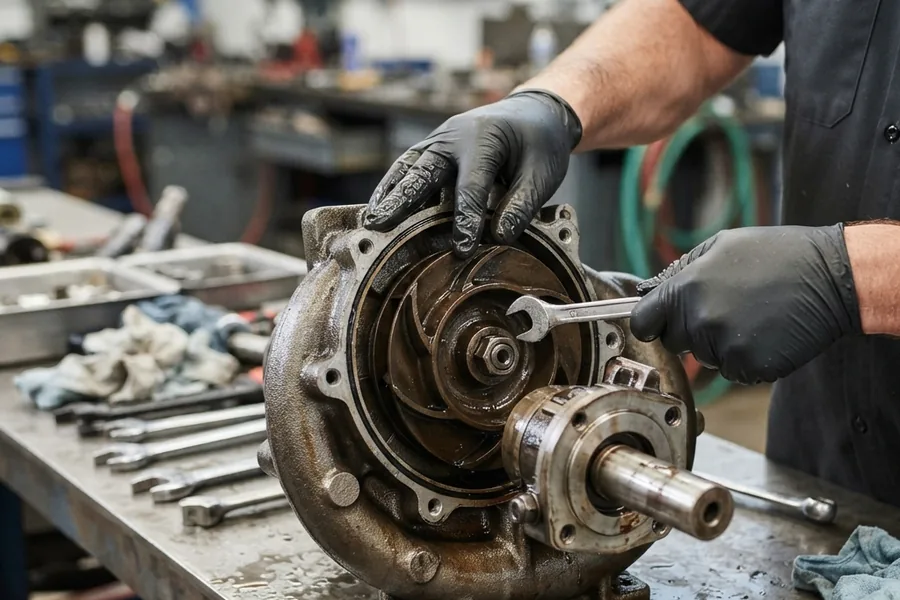
    Jet pump repair, suction line and fittings checked for air leaks

    Physics, not opinion

    The 25-Foot Rule

    There is a hard limit on how far any pump can lift water by suction alone, and it is not a matter of buying a stronger motor. Atmospheric pressure sets the ceiling.

    • Shallow well jet pumps — single pipe, limited to roughly 25 feet of lift. Beyond that no amount of power helps.
    • Convertible and deep well jet pumps — two pipes, with a jet assembly down the well, extending the reach to around 100 feet.
    • Beyond about 100 feet — a jet pump is the wrong tool, because pushing beats pulling at depth. See submersible pump repair.
    • A dropping water table — a system that worked for years can fall out of range in a dry season, with no fault in the pump at all.

    Jet Pump FAQs

    Why does my jet pump keep losing prime?

    Air is getting into the suction side. The usual culprit is a failed foot valve letting the line drain back when the pump stops, but a leaking joint above the water line or a dropping water level will do the same thing.

    Can I prime it myself?

    You can, and it will often run again for a while. The catch is that a pump which needs priming repeatedly has an underlying fault, and every dry start wears the seals. Priming treats the symptom, not the cause.

    How deep can a jet pump draw water from?

    A shallow well jet pump manages about 25 feet, because suction cannot lift water further than atmospheric pressure allows. A two-pipe deep well or convertible jet pump extends that to roughly 100 feet.

    What is the difference between a shallow well and a convertible jet pump?

    A shallow well pump uses one pipe and does all the work at the surface. A convertible uses two pipes and places a jet assembly down the well, which lets it reach considerably deeper. Convertibles can be set up either way.

    My jet pump is noisy. Is it about to fail?

    Not necessarily. Rattling or surging is usually cavitation, meaning air or a restriction in the suction line, and that is fixable. A steady grinding noise is more likely bearings, and that is worth looking at sooner.

    Should I switch to a submersible?

    Only if your well depth justifies it. A submersible is quieter and more efficient, but converting is a project involving down-hole pipe, cable and usually a pitless adaptor. If your jet pump suits the well, repairing it is far cheaper.

    Jet pump losing prime?

    It is one of the most common calls we take, and usually one of the cheapest to put right. Most jet pump faults are sorted in a single visit.