
If your well pump is switching on and off every few seconds, stop reading for a moment and go and listen to it. Count the seconds between each start.
If it is cycling every ten to thirty seconds while a tap is running, you are looking at the single most destructive fault a well pump system can develop — and one of the cheapest to fix, if you catch it in time.
This is called short cycling. Here is what causes it, why it matters so much, and what it usually takes to put right.
What short cycling actually is
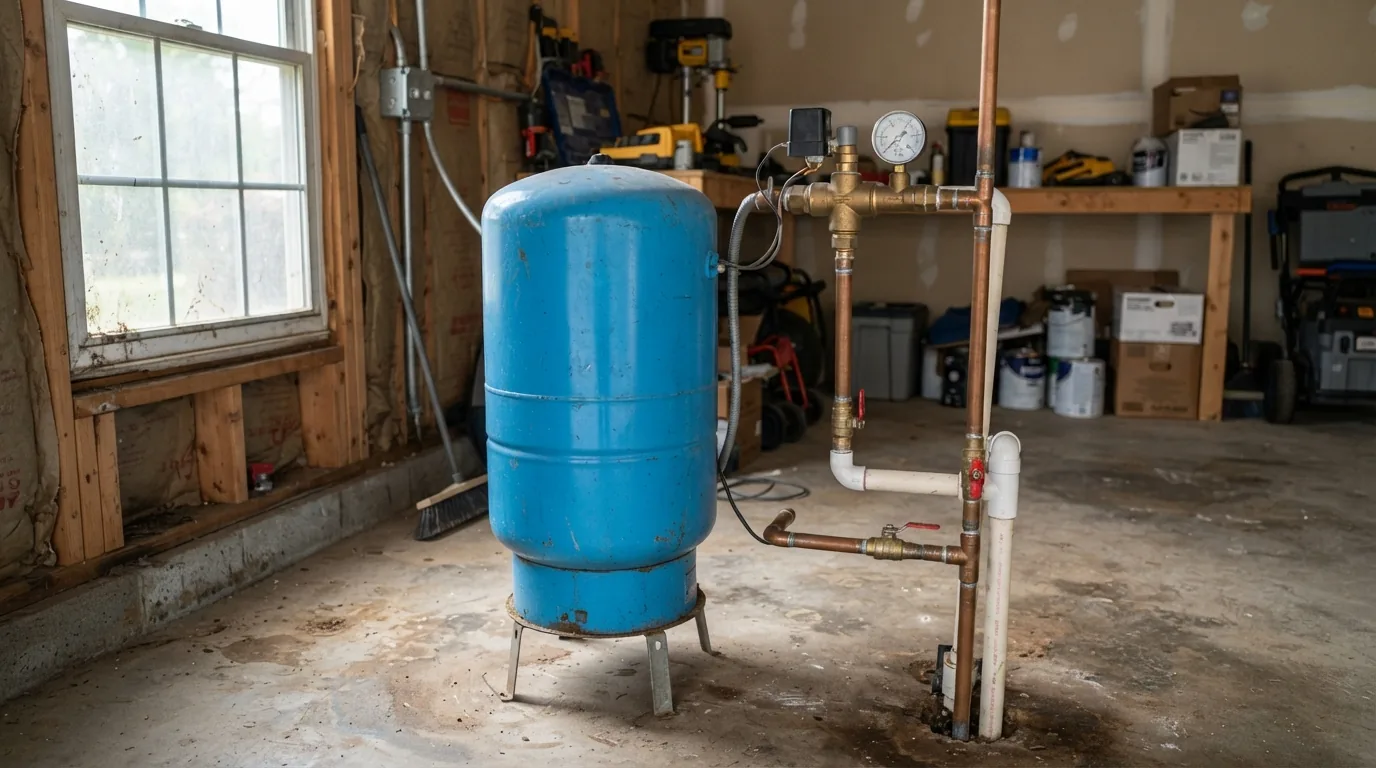
A well pump is not supposed to run continuously while you use water. It fills a pressure tank, the tank holds a reserve under pressure, and that reserve is what feeds your taps. The pump only restarts when the tank drops to a set pressure.
On a healthy system with a correctly sized tank, that means the pump runs for a minute or more, then rests for a while. It might start half a dozen times during a morning.
When a system short cycles, the tank has stopped holding its reserve. There is nothing to buffer your water use, so the pump starts, builds pressure almost instantly, cuts out, and then immediately drops below the cut-in pressure again. Start, stop, start, stop — sometimes hundreds of times a day instead of a handful.
Why this destroys pumps
The damage does not come from the running. It comes from the starting.
An electric motor draws a large surge of current the moment it starts — several times what it uses once it is turning. That surge generates heat in the windings. A pump that starts eight times a day handles this comfortably for a decade or more. A pump that starts three hundred times a day is absorbing that heat over and over, with no time to cool between cycles.
The result is predictable. Windings degrade, bearings wear, the control components fail early, and a pump rated for ten to fifteen years reaches the end in two or three.
There is a second cost that people notice sooner: your power bill. Those start-up surges are the most expensive moments in the pump’s cycle, and short cycling multiplies them.
What causes it
A pressure tank that has lost its air charge
This is the cause in the large majority of cases we attend.
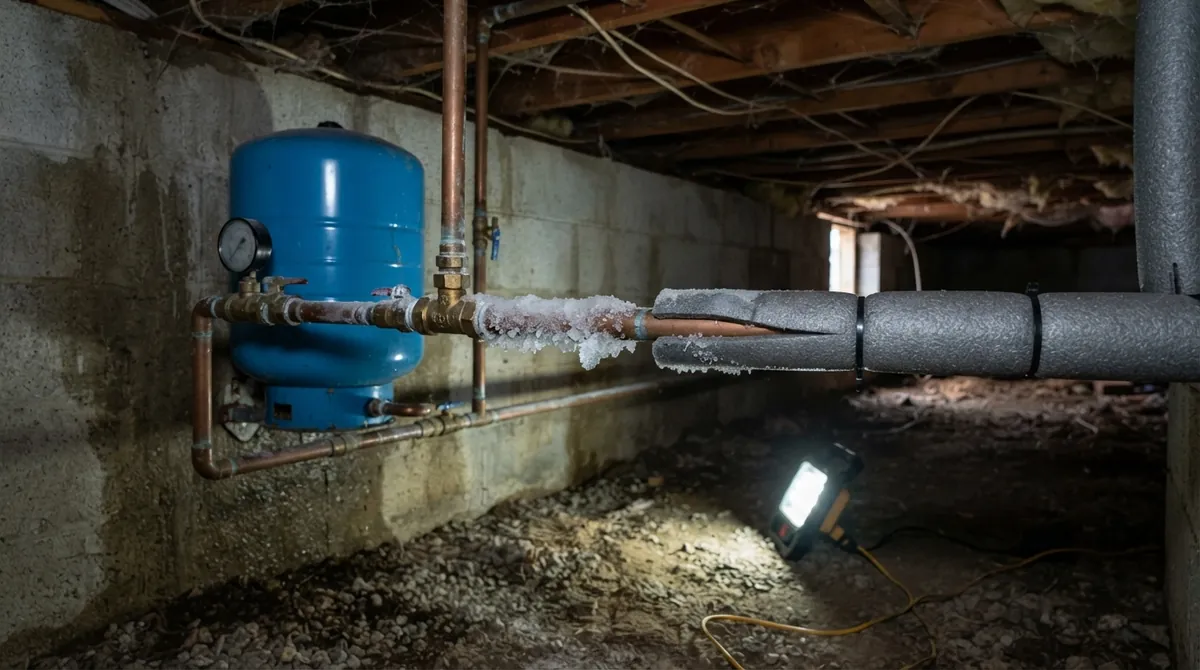
Inside a pressure tank is a rubber bladder or diaphragm separating water from a cushion of compressed air. That air cushion is what actually stores pressure. When the bladder fails or the air charge leaks away, the tank fills completely with water — and water does not compress. The tank becomes a plain steel container with no reserve capacity at all.
A simple test: knock on the side of the tank, top and bottom. The top should sound hollow and the bottom solid. If it sounds solid all the way up, it is waterlogged. Our full guide to checking and recharging a waterlogged pressure tank walks through the gauge test and what the reading should be.
A failing pressure switch
The pressure switch is the small box that tells the pump when to start and stop. Its contacts pit and burn over years of use, and a worn switch can trigger erratically — starting the pump before it should, or cutting out early.
The switch is the cheapest part on a well system and the most common thing to fail on any of them.
A tank that was too small to begin with
This one shows up constantly on properties where the house grew. A tank sized for a two-bathroom home in 1990 is still sitting there serving a four-bathroom home with a dishwasher, two showers running at breakfast and an irrigation system in summer.
Nothing has broken. The tank simply cannot hold enough reserve for the demand being placed on it, so the pump chases every draw. Fitting a correctly sized tank fixes this outright. We see this pattern most often on the larger newer builds — well pump repair in Simpsonville and Greer throws up more of these than anywhere else in the area.
A restriction or leak on the line
Less common, but worth ruling out — particularly on rural properties with long buried runs to barns, troughs or outbuildings. A leak on that line bleeds pressure continuously, so the pump keeps restarting to make it up. This is a recurring cause on working properties around Fountain Inn, where a single well often feeds the house, the barn and the stock. Finding it takes proper flow and pressure testing rather than guesswork.
What it does not usually mean
It does not usually mean the pump is failing.
This matters, because short cycling is one of the most frequently misdiagnosed faults in the trade. The symptom people report — “the pump keeps kicking on” — sounds like a pump problem, and a contractor who does not work on wells regularly may quote for a replacement.
Replacing the pump without fixing the tank achieves nothing except a larger bill. The new pump short cycles exactly like the old one and fails just as early, because the underlying cause was never addressed.
If someone has quoted you for a new pump on the back of this symptom and nobody tested the pressure tank first, it is worth a second opinion. If you are searching for well pump repair near you after a quote like that, the question to ask is not how quickly someone can get to you — it is what they test before they price the job.
What it costs to fix
We do not quote over the phone, because an honest number is not possible until someone has tested the system. But the range is worth understanding:
- Re-charging a tank that has simply lost air, where the bladder is intact, is a small job.
- Replacing a pressure switch is the cheapest component on the system.
- Replacing a waterlogged pressure tank is a moderate job, and considerably less than a pump. See pressure tank service for what that involves.
- Replacing a pump that was destroyed by months of short cycling costs several times any of the above. Well pump replacement is the last resort, not the starting point.
The point is not the individual figures. The point is that the first three prevent the fourth, and the gap between them is large.
What to do now
- Do not ignore it. This is a fault that gets more expensive every week it runs.
- Knock on the pressure tank — hollow at the top, solid at the bottom. Solid throughout means waterlogged.
- Note the timing. How many seconds between starts, and whether it happens on all taps or only some. That tells us a lot before we arrive.
- Get it tested properly — tank charge, switch settings, and the pump itself, in that order. That sequence is what a proper well pump repair looks like, and it is what separates a diagnosis from a guess.
Short cycling is one of the few well faults where acting quickly genuinely saves money rather than just avoiding inconvenience. The tank is a fraction of the cost of the pump it is quietly destroying.
What to remember
| 1 | It is the tank, not the pump. In the large majority of cases the pressure tank has lost its air charge and can no longer hold a reserve. |
| 2 | The damage comes from starting, not running. Hundreds of starts a day instead of a handful is what ends a pump early. |
| 3 | You can test the tank in ten seconds. Knock top and bottom. Hollow at the top and solid at the bottom is healthy. Solid throughout means waterlogged. |
| 4 | A quote for a new pump on this symptom deserves a second opinion — particularly if nobody tested the pressure tank first. |
| 5 | Every week it runs costs money. Higher power bills now, and a shorter pump life later. |
Frequently asked questions
Why does my well pump keep turning on and off every few seconds?
It is called short cycling, and it almost always means the pressure tank has lost its air charge. The tank can no longer hold a reserve, so the pump restarts every time you draw water instead of resting between uses.
Is short cycling actually damaging my pump?
Yes. The damage comes from starting rather than running. Each start draws a large current surge that heats the motor windings, and a pump starting hundreds of times a day instead of a handful can reach the end of its life in two or three years instead of ten to fifteen.
How can I tell if my pressure tank is waterlogged?
Knock on the side of the tank, top and bottom. The top should sound hollow and the bottom solid. If it sounds solid all the way up, the tank has filled with water and lost its air cushion.
Does short cycling mean I need a new pump?
Usually not. It is one of the most misdiagnosed faults in the trade, because the symptom sounds like a pump problem. Replacing the pump without fixing the tank achieves nothing — the new pump short cycles the same way and fails just as early.
What causes a pressure tank to stop working?
A failed bladder or a leaked air charge is the most common cause. Others include a worn pressure switch, a tank sized for a smaller household than it now serves, or a leak on a buried supply line bleeding pressure away.
Can I keep using the water while I wait for a repair?
You can, but every day of short cycling adds wear. If it is convenient, reducing heavy water use until it is looked at will slow the damage. It will not stop it.
How quickly should I get this looked at?
Within days rather than weeks. This is not an emergency in the sense that you still have water — but it is the one fault where waiting reliably makes the bill bigger.
Get it tested before it costs more
Is it the tank, or the pump?
We service private wells across Upstate South Carolina and test the whole system — pressure tank, switch, control box, wiring and pump — before quoting anything. If the fault is a tank or a switch, we will tell you that, even though a replacement pump would pay us considerably better.
Open 7am–9pm, seven days · No call-out fee with a repair · Fixed price agreed in writing
Read more about pressure tank service and pressure switch repair, or see the areas we cover. Prefer to write? Use our contact form and tell us roughly how many seconds there are between each start — that one detail tells us a great deal before we arrive.