Skip links
Submersible Pumps

Submersible Well Pump Repair

Submersible well pump repair starts with everything that can be tested from the surface. Your pump sits at the bottom of the well, often between 100 and 400 feet down, and pulling it is most of the labour on the job.

✓ Surface testing first    ✓ Drop pipe and splices checked    ✓ No charge for the drive

Get a Free Quote

Rather not call? Send this and we’ll get back to you fast.

    Submersible pump repair, pulled from the well for inspection
    4-6 hrsTypical pull

    Start here

    Everything Testable Gets Tested Before Anything Is Pulled

    A submersible is a sealed motor and pump assembly hanging on the end of a pipe, deep in the casing. Nothing about it can be inspected without lifting the whole string out of the ground, and that is the part that costs money.

    The useful news is that most of what fails on a submersible announces itself at the surface. Amp draw, insulation resistance and voltage at the control box will usually tell us whether the motor is the problem before a single length of pipe comes up.

    • Motor will not start — could be the motor, or a control box component that costs a fraction as much.
    • Runs but delivers no water — often a failed check valve or a split drop pipe, not the pump itself.
    • Intermittent operation — a failing splice in the down-hole cable, which shows up as a resistance fault.
    • Sand or grit at the taps — worn impellers, or the pump sitting too low in the well.
    • Overload keeps tripping — a locked rotor, a shorted winding, or damaged cable insulation.

    We test the motor, control box, cable and check valve from the surface first, because these faults imitate each other. If it turns out to be above ground, see pressure switch and control box repair.

    What Fixing a Submersible Pump Actually Involves

    When the pump does have to come out, the work is as much about the string it hangs on as the pump itself. Pulling a good pump and refitting it on tired pipe is how a repair turns into a repeat visit.

    Surface diagnostics

    Amp draw, insulation resistance and voltage tested at the control box, so we know what we are dealing with before a rig sets up over the well.

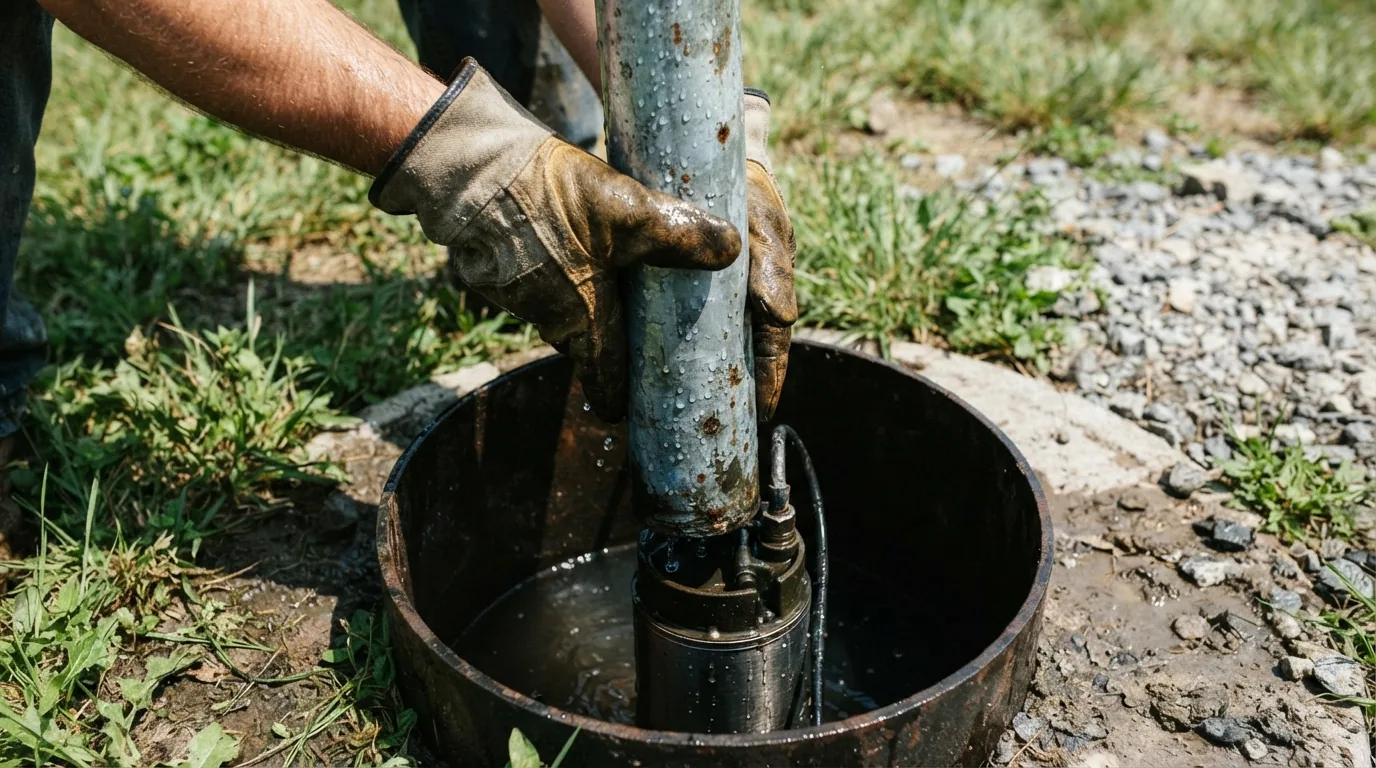
    Pulling the string

    Pump, drop pipe, safety rope and cable come up together. Depth and pipe type decide how long this takes far more than the fault does.

    Drop pipe and splices

    Every joint and every cable splice gets inspected on the way up. A pinhole in galvanised pipe or a wet splice will undo a new pump within months.

    Motor and pump end

    The two halves fail differently. A worn pump end with a healthy motor is a different repair, and a different price, from a burnt-out motor.
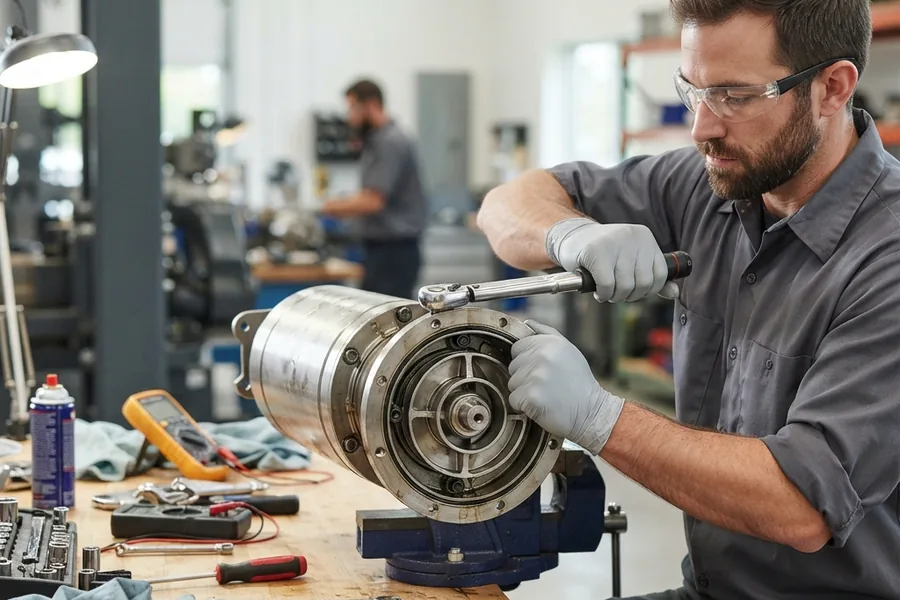
    Submersible pump repair at the well head, drop pipe inspected

    What drives the cost

    Depth Decides More Than the Fault Does

    Two homes with an identical failure can get very different quotes for submersible pump repair, and it is rarely about the part. Access is the expense, and on a deep well in the foothills around Travelers Rest or parts of Anderson County, the pull itself is most of the job.

    • Well depth — a pump at 120 feet and one at 380 feet are the same repair with very different labour.
    • Drop pipe material — older galvanised sections are heavier, more likely to be corroded, and often need replacing on the way back down.
    • Casing condition — a well that has shifted or collected debris makes a straightforward pull much slower.
    • Cable and splices — down-hole cable spliced repeatedly over the years is usually worth replacing while the string is out.
    • Age of the pump — if a fifteen-year-old pump is already out of the ground, well pump replacement may cost less over the next five years than refitting it.

    Submersible Pump FAQs

    Can you tell it is the pump without pulling it?

    In most cases yes. Insulation resistance and amp draw measured at the control box will show a shorted winding, an open circuit or a locked rotor. What surface testing cannot tell you is the condition of the drop pipe, which is why that gets inspected on the way up.

    How long does it take to pull a submersible?

    Usually four to six hours for the whole job, though depth changes that considerably. Most of the time goes on the string rather than the pump.

    Can a submersible be repaired, or does it have to be replaced?

    It depends which half failed. A pump end can sometimes be rebuilt while the motor is still sound, while a burnt-out motor is normally replaced. Once the pump is out of the well the labour is spent either way, so the decision comes down to the age of the unit.

    What is a drop pipe and why does it matter?

    It is the pipe the pump hangs from, running the full depth of the well. It carries the weight of the pump and every gallon you use. A split or corroded section gives you exactly the same symptoms as a failed pump.

    Why is there sand in my water?

    Either the impellers have worn and are passing grit, or the pump is set too close to the bottom of the well. Both are worth sorting out, because sand accelerates wear on everything downstream of it.

    Do you handle deep well pump repair?

    Yes. A deep well means a longer, heavier string, so the pull is planned around the depth: the right lifting equipment, the safety rope and torque arrestor checked, and every cable splice inspected on the way up. Surface testing matters even more here, because an unnecessary pull costs more with every extra foot.

    Is a submersible more expensive to fix than a jet pump?

    Generally yes, because of the extraction. A jet pump sits above ground where it can be reached. That access difference is the main reason surface diagnosis matters so much here.

    Think your submersible has failed?

    Before anyone sets up a rig over your well, let us test it from the surface. Plenty of no-water callouts turn out to be a control box fault instead.