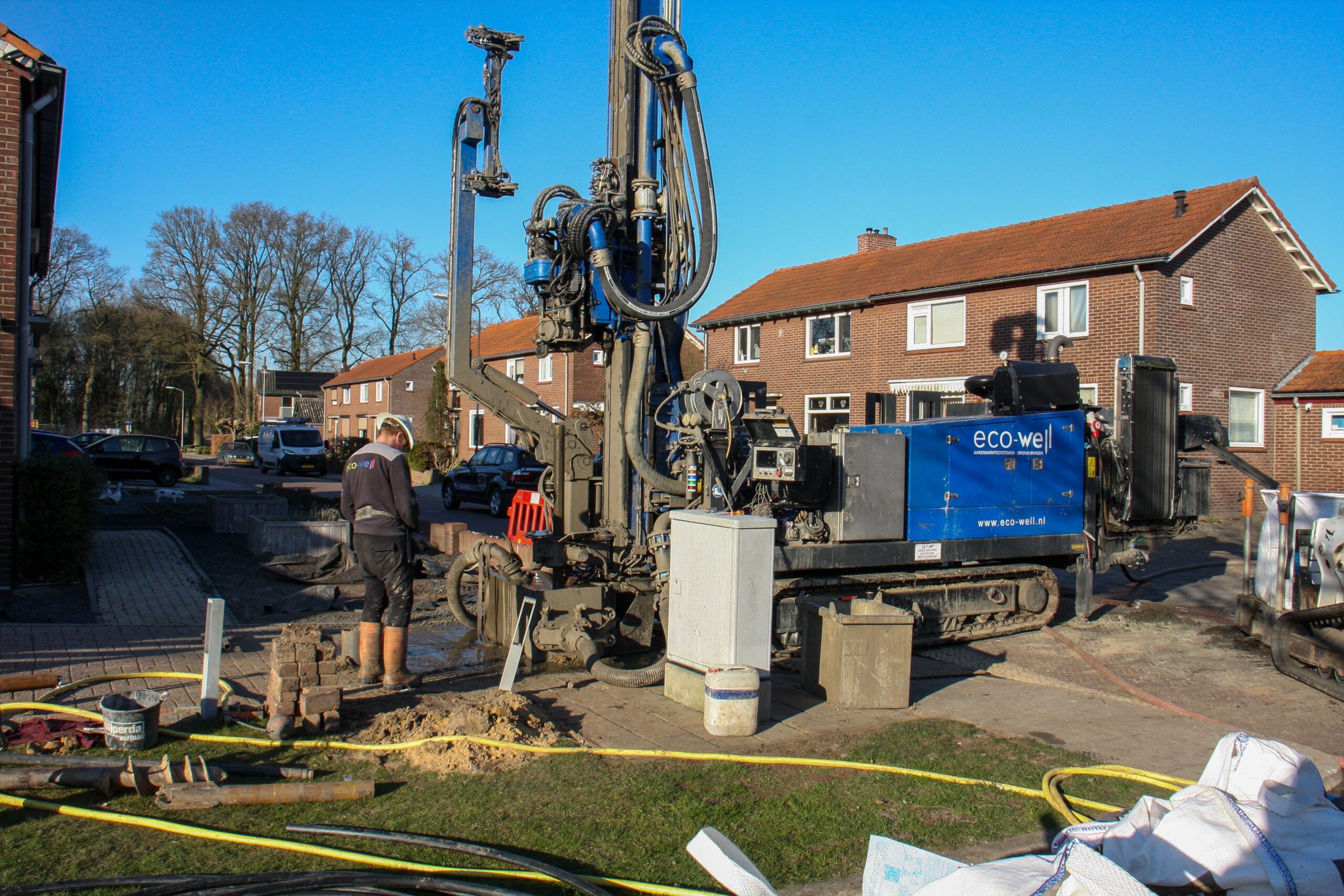

Most people only price a well once: when they are building on land with no public water, or when an old well has finally given out. Either way, the first quote usually comes as a surprise, mostly because it arrives with a range rather than a figure. That range is honest. Here is what sits inside it.
What goes into the price
| Drilling, per foot | The largest single line. Charged for every foot the rig bores, whether or not that stretch produces water. |
| Casing, per foot | Steel or PVC pipe lining the hole through soil and weathered rock until it reaches solid bedrock. Deeper weathered rock means more casing. |
| Grouting and wellhead | The seal around the outside of the casing and a sanitary cap. Small on the bill, large in importance. |
| Pump system | Submersible pump, drop pipe, wire, pitless adapter, pressure tank, switch and controls. Sized to the well’s depth and yield. |
| Trench and connection | The water line and power run between well and house. Distance and ground conditions decide it. |
| Permit and testing | A private well permit through SCDES before drilling, and a water test once the well is finished. |
Why depth is the big unknown in the Upstate
Upstate South Carolina sits on crystalline bedrock — granite, gneiss and schist — under a thick layer of weathered rock and red clay. There is no single underground lake to tap into. Water moves through fractures in the rock, and the driller is looking for enough fractures, at a usable depth, to supply a household.
Two lots a short distance apart can hit those fractures at very different depths. One may produce plenty at a modest depth. Its neighbour may need to go far deeper for the same yield, and occasionally a hole comes in dry and a second site has to be tried. That is why responsible drillers quote a per-foot rate and an expected range rather than a guaranteed total.
Local geology also varies across our area. Wells in the foothills around Travelers Rest tend to sit deeper in harder rock than those on the flatter ground near Simpsonville or Fountain Inn. More on that in the Upstate well owner’s guide.
Ask what happens if the well comes in dry or low. Some contracts charge full footage regardless; others have a different rate for an unproductive hole. Know which before the rig starts, not after.
Things that push the cost up
- Deep weathered rock, which means more casing before the driller reaches solid bedrock.
- Low-yield wells that need extra depth, or extra storage, to supply a household reliably.
- Difficult access — steep lots, soft ground, or a site far from the driveway.
- A long run to the house, especially through rock or under existing hardscape.
- A larger pump system for irrigation, a pool or several buildings on one well.
Replacing a well versus replacing a pump
When an existing well stops delivering water, drilling a new one is rarely the first answer. Far more often the problem is the pump, the pressure tank, a switch or a broken pipe — all a fraction of the cost of new drilling. Before anyone quotes for a new well, the old one should have a proper yield and flow test to show whether the well itself is failing.
If the well is sound, see well pump replacement cost instead. If the test shows the well genuinely cannot keep up, deepening it or drilling a new one becomes the conversation.
How to compare two quotes
- Line the per-foot rates up for drilling and casing separately.
- Check the estimated depth each driller expects, and how they arrived at it.
- Compare the pump systems by brand, horsepower, tank size and warranty, not just total price.
- Confirm who handles the permit, the grouting and the final water test.
- Ask about the dry-hole policy in writing.
Where we work
Well service across Upstate South Carolina
| ✓Anderson | ✓Greer |
| ✓Taylors | ✓Mauldin |
| ✓Simpsonville | ✓Fountain Inn |
| ✓Travelers Rest | ✓Easley |
What to remember
| 1 | Depth decides the bill. And nobody knows it exactly until the rig is drilling. |
| 2 | Get per-foot pricing. Drilling and casing listed separately make bids comparable. |
| 3 | Neighbours are a hint, not a promise. Fractured rock varies lot to lot. |
| 4 | Agree the dry-hole terms first. In writing, before drilling starts. |
| 5 | Test before you replace. A failing pump is far cheaper than a new well. |
Frequently asked questions
How much does it cost to drill a well in South Carolina?
It depends mainly on how deep the driller has to go to find enough water, plus casing, the pump system and the connection to the house. Drillers quote a per-foot rate and an expected depth range rather than a fixed total, because depth is not known until drilling starts.
How deep are wells in Upstate South Carolina?
Most household wells are drilled into fractured bedrock and commonly run to a few hundred feet, but depth varies widely between nearby lots depending on where the rock fractures are.
Do I need a permit to drill a well in South Carolina?
Yes. A private well needs a permit through the South Carolina Department of Environmental Services (SCDES) before drilling. Your driller normally handles the application.
What happens if the well comes in dry?
It depends on the contract. Some drillers charge full footage for an unproductive hole; others charge a reduced rate. Agree the terms in writing before drilling begins.
Is the pump included in the drilling price?
Not always. Many quotes list drilling and casing separately from the pump system, tank and controls. Check that every bid you compare covers the same items.
Should I drill a new well or replace my pump?
Test first. Most failing water supplies are a pump, tank, switch or pipe problem. A yield and flow test shows whether the well itself is failing before you pay for new drilling.
Thinking about a new well?
Find out whether you actually need one
We test the existing well’s yield, the pump and the tank, and tell you plainly whether the answer is a repair, a new pump or a new well — with a fixed price in writing first.
Open 7am–9pm, seven days · No call-out fee with a repair · Fixed price agreed in writing
See our water flow and pressure testing page, and buying a house with a well if you are weighing up a property.