
Most homeowners never need to know this until the day the pump fails, and then it becomes urgent all at once. Someone on the phone asks what type you have, and the honest answer is that nobody has ever mentioned it.
It is worth ten minutes now rather than ten minutes with no water in the house.
How to tell which one you have
Go and look at where the pipework enters the house, or at the well head.
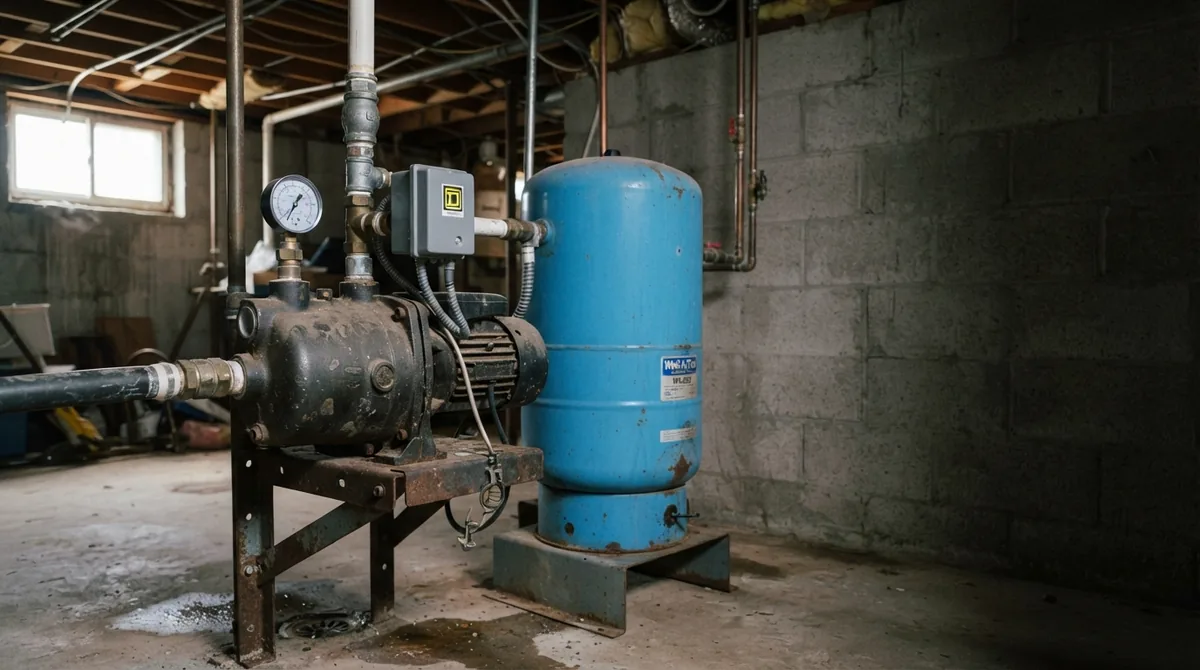
If there is a pump visibly bolted to something — a motor about the size of a large shoebox, sitting on a bracket in the basement, crawl space, garage or a small shed near the well — that is a jet pump. It is noisy when it runs, and you can put your hand on it.
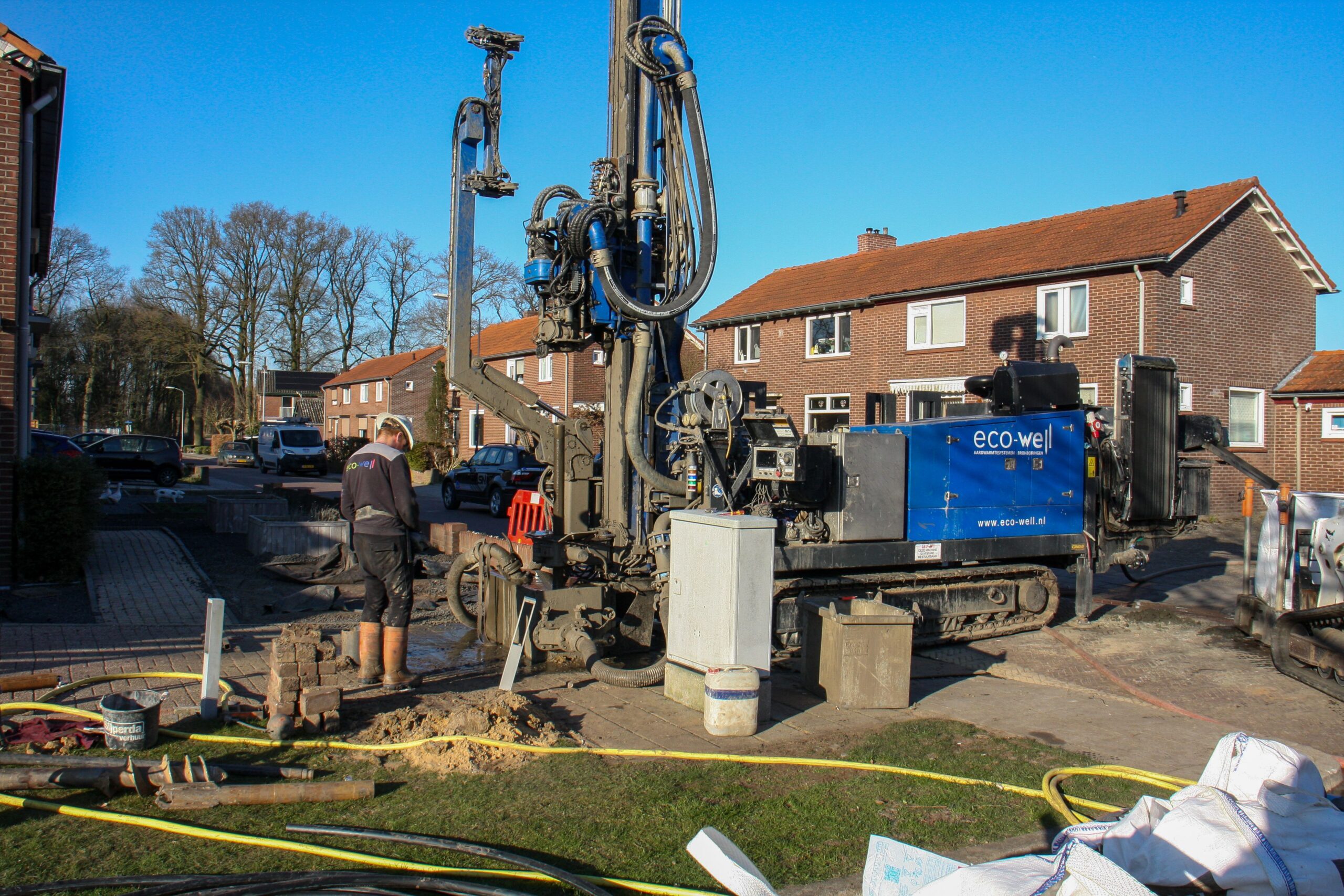
If all you can see is a sealed well cap, a pipe disappearing into the ground, and a pressure tank inside the house with no motor attached to it, you have a submersible. The pump is at the bottom of the well, and the only sign of it running is a very faint hum through the pipework.
The short version. Can you see and touch the pump? Jet. Can you only see a well cap and a tank? Submersible. That single distinction changes what a repair costs, because one is accessible and the other is several hundred feet underground.
How each one works
Jet pumps pull
A jet pump creates suction to draw water up the well. That is its strength and its ceiling: suction can only lift water so far before atmospheric pressure runs out, which in practice means around 25 feet for a shallow-well jet pump.
Deep-well jet pumps get around this with a two-pipe arrangement that sends some water back down to a jet assembly in the well, extending the range to roughly 100 feet. It works, but it is doing something inherently inefficient — part of the pump’s output is being spent to help lift the rest.
Submersibles push
A submersible sits below the water line with the motor sealed inside it. Rather than fighting suction limits, it pushes water upward, which is a far easier task in physical terms. That is why it can handle wells hundreds of feet deep, and why it is more efficient at almost any depth.
It is also quieter, because the motor is underwater and underground, and it stays primed, because it is permanently submerged.
Where each one makes sense
| Depth | Jet: shallow wells to about 25 feet, deep-well versions to roughly 100. Submersible: effectively no residential limit. |
| Efficiency | Submersible uses noticeably less electricity for the same delivery, and the gap widens with depth. |
| Noise | Jet pumps are audible in the house. Submersibles are effectively silent. |
| Access for repair | Jet pumps are the clear winner — you can reach them. Submersibles have to be pulled from the well. |
| Expected life | Around ten years for a jet pump, eight to fifteen for a submersible. See how long a well pump lasts. |
| Priming | Jet pumps can lose prime and need re-priming. Submersibles cannot — they are always underwater. |
Which to install when yours fails
For most Upstate properties this is not really a choice. Piedmont wells drilled into fractured bedrock are typically well beyond jet pump range, so a submersible is the only workable option and the replacement is like for like.
Where a genuine choice exists — a shallow well, a spring, or a bored well within suction range — the decision usually comes down to two things:
- Access versus efficiency. A jet pump costs less to install and is far cheaper to service, because nobody has to pull anything out of the ground. A submersible costs more up front and runs cheaper for a decade.
- What the house needs. If demand has grown — more bathrooms, irrigation, more people — a shallow jet pump that coped in 2005 may simply not have the capacity now, and replacing like for like repeats the problem.
One thing not to do is switch types on the strength of a sales pitch alone. Converting from jet to submersible means new down-hole pipe, cable and often a pitless adaptor. It can be entirely justified on a deep well that was fitted with the wrong pump years ago, but it is a project rather than a swap, and it should be quoted as one. What replacement involves either way is set out in well pump replacement, and the decision framework is in repair or replace.
What goes wrong with each
Jet pumps lose prime, which is the fault people meet most often — the pump runs, sounds normal, and delivers nothing. They also suffer from failed foot valves, worn impellers, and a leaking suction line letting air in. The advantage is that every one of those is above ground and diagnosable in an afternoon.
Submersibles fail from motor wear, sand abrasion, and drop cable faults. Rarely, the drop pipe splits or the check valve fails. All of it needs the pump pulled, which is why diagnosis before extraction matters so much — the symptoms overlap with much cheaper faults. See running but no water and breaker tripping.
Both types share the same above-ground failures, and those are the common ones by a wide margin: a waterlogged pressure tank and a failing pressure switch.
Where we work
Jet and submersible pump work across Upstate South Carolina
| ✓Anderson | ✓Greer |
| ✓Taylors | ✓Mauldin |
| ✓Simpsonville | ✓Fountain Inn |
| ✓Travelers Rest | ✓Easley |
What to remember
| 1 | If you can see the pump, it is a jet pump. A sealed well cap and nothing else means submersible. |
| 2 | Depth makes the decision. Beyond about 100 feet, a submersible is not a preference — it is the only option. |
| 3 | Losing prime points at a jet pump. A submersible cannot lose prime, so that symptom rules one of them out immediately. |
| 4 | Converting types is a project, not a swap. It needs new pipe, cable and often a pitless adaptor, and should be quoted that way. |
| 5 | Most faults are shared and above ground. Tank and switch problems affect both types, and both are cheap fixes. |
Frequently asked questions
How do I know if I have a jet pump or a submersible?
Look for a visible motor. A jet pump sits above ground in a basement, crawl space, garage or well house, and you can see and touch it. With a submersible there is nothing to see except the well cap and the pressure tank, because the pump is at the bottom of the well.
Which is better, a jet pump or a submersible?
A submersible is more efficient, quieter and suits any depth, which makes it the better pump for most wells. A jet pump’s advantage is access: it costs less to install and far less to service, because nobody has to pull it out of the ground.
How deep can a jet pump draw water from?
A shallow-well jet pump is limited to roughly 25 feet, because suction cannot lift water further than atmospheric pressure allows. A two-pipe deep-well jet pump extends that to about 100 feet.
Can I replace a jet pump with a submersible?
Yes, if the well is suitable, but it is a conversion rather than a swap. It needs down-hole pipe, cable, and usually a pitless adaptor, so it should be priced as a project and justified by the well depth rather than by preference.
Why does my jet pump keep losing prime?
Air is getting into the suction side, most often through a failed foot valve, a leaking suction line, or a low water level in the well. A submersible cannot have this fault at all.
Which pump lasts longer?
A submersible usually does, at eight to fifteen years against about ten for a jet pump, largely because it runs cooler underwater. Cycling frequency affects both far more than the type does.
Is a submersible more expensive to repair?
Yes, and by a wide margin, because the pump has to be pulled from the well before anything can be touched. That is why diagnosis before extraction is worth insisting on — the cost breakdown is in how much well pump repair costs.
Not sure what you have?
We will tell you, and what it needs
Pump type, depth, sizing against what your household actually uses, and an honest view of how much life is left in what you have. Fixed price agreed in writing before any work starts.
Open 7am–9pm, seven days · No call-out fee with a repair · Fixed price agreed in writing
More on installation under well pump replacement, or everything we cover under well pump repair. Background on how wells behave in this region is in the Upstate well owner’s guide.