
It is almost never a convenient time. Wells fail on Sunday evenings, on holiday weekends, and at ten at night when the last person to shower finds nothing coming out.
The instinct in that moment is to start doing things. A short, ordered list is better than that instinct, because two or three of the possible causes get worse the more you interfere with them.
No water from well at night: the first five minutes
1. Is it the whole house?
Try a tap at the other end of the house, and one on a different floor. If one fixture is dry and the rest are fine, this is a plumbing problem at that fixture, not a well problem, and it can wait until morning without any risk.
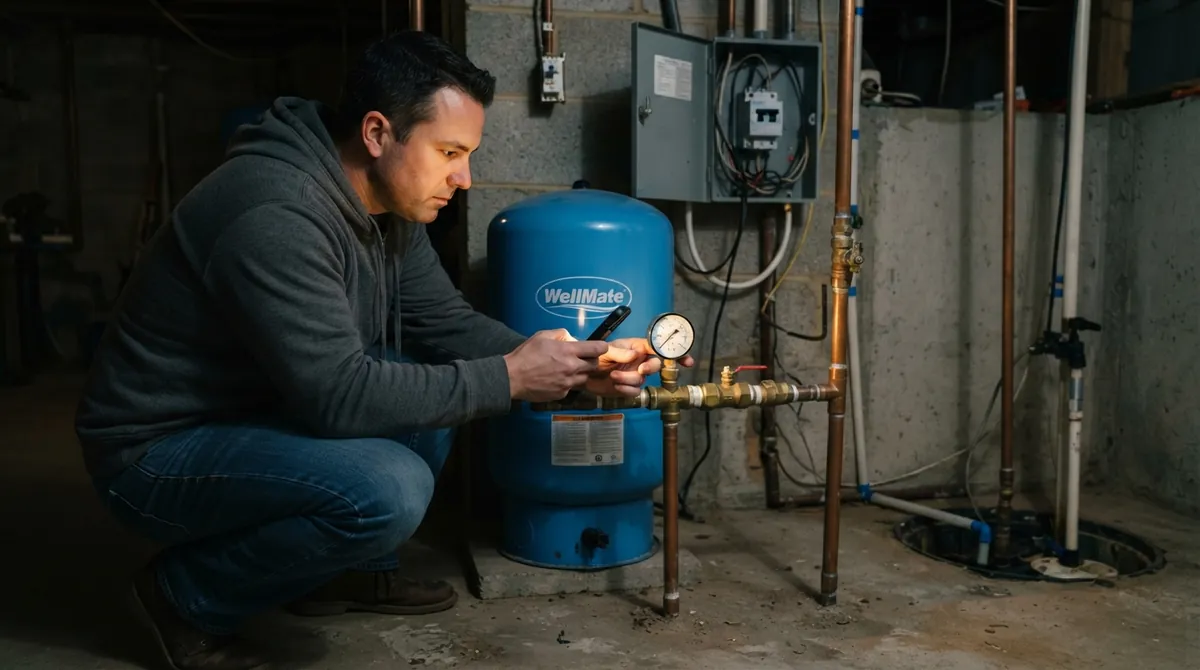
2. Look at the pressure gauge
The small round gauge near the pressure tank. What it reads tells you a great deal:
- Zero — the pump is not delivering. Electrical fault, pump fault, or a well that has drawn down.
- Normal but no water at the taps — a closed valve or a blockage between the tank and the house.
- Falling steadily with everything off — a leak somewhere in the system.
3. Check the breaker
Find the double-pole breaker for the pump. If it has tripped, reset it once. If it holds and water returns, note that it happened and get it looked at — a trip is a symptom, not an event.
If it trips again, stop there. Every reset drives full starting current into whatever is faulty — an overheating motor, or a cable already leaking to earth. This is the single most expensive mistake made on out-of-hours calls, and it is made hourly. Why it matters is set out in breaker keeps tripping.
4. Listen at the well head and the tank
Open a tap and go and listen. A hum with no water means the motor is receiving power but not turning — switch it off at the breaker rather than leaving it straining. Complete silence points at the switch or the supply. If you can hear it running normally but nothing arrives, see running but no water.
5. Knock on the pressure tank
Hollow at the top, solid at the bottom is healthy. Solid all the way up means the tank has waterlogged, which is worth knowing before anyone arrives — it is the cheapest fault on the list and it is also the most common. Details in the tank air charge check.
What to stop doing
Four things make an out-of-hours situation materially worse.
- Repeatedly resetting a tripping breaker. Covered above, and worth repeating because it is the one that costs real money.
- Leaving a humming pump powered. A motor that is drawing current without turning is cooking itself. Breaker off.
- Running a pump that is spitting air. Air from the taps in late summer usually means the water level has dropped toward the intake. Running it dry destroys pumps quickly. Switch it off and let the well recover overnight — levels often recover by morning.
- Turning the pressure switch up. It will not conjure water, and on a pump that cannot reach the new cut-out it produces a pump that never stops running. See pressure switch replacement.
Getting through the night
If the water is not coming back tonight, a few practical points make the wait easier.
| Toilets | Each has one flush left in the cistern. After that, a bucket of water poured briskly into the bowl will flush it. |
| Water heater | Holds 40 gallons or more, accessible from the drain valve at the base. Switch it off first if the outage will run long — heating elements do not survive running dry. |
| Drinking water | Use bottled. Water sitting in a heater tank is fine for flushing and washing, not for drinking. |
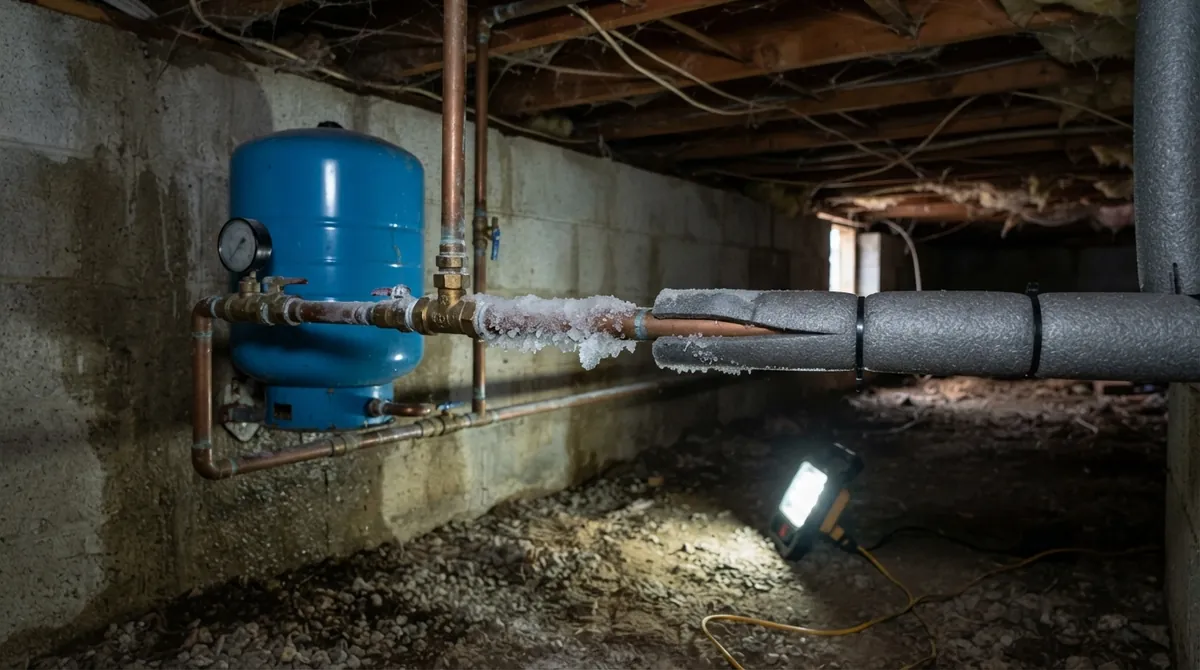
| In winter | If the cause might be a frozen line, keep the house warm and open the cabinet doors under sinks on outside walls. |
What actually needs a call tonight
Not everything does, and knowing the difference saves an out-of-hours charge.
Worth calling immediately: a pump that will not shut off, water where it should not be, a burning smell from the switch or control box, or a household that genuinely cannot go without water — medical need, an infant, livestock.
Usually fine until morning: a single dry fixture, a pump you have already switched off safely at the breaker, or a well that has drawn down and needs time to recover anyway. In these cases waiting costs nothing and the daytime rate is lower.
What to have ready when you call
Four pieces of information cut diagnosis time substantially, and out-of-hours time is the expensive kind.
- What the gauge reads. Zero, normal, or falling.
- What the breaker does. Holds, trips instantly, or trips after a few minutes.
- What you can hear. Silence, a hum, or a pump running normally.
- What changed. Storm, power cut, freeze, dry spell, or recent work near the well.
Where we work
Emergency well pump callouts across Upstate South Carolina
| ✓Anderson | ✓Greer |
| ✓Taylors | ✓Mauldin |
| ✓Simpsonville | ✓Fountain Inn |
| ✓Travelers Rest | ✓Easley |
What to remember
| 1 | One reset only. If the breaker trips again, leave it off and wait. This is the rule that saves pumps. |
| 2 | A humming pump gets switched off. It is drawing current without turning, and that destroys motors within minutes. |
| 3 | Air from the taps means stop. The well is drawing down. Off for the night, and it will often recover by morning. |
| 4 | The water heater is 40 gallons of reserve. Switch it off before draining it, or the elements go too. |
| 5 | Label your pump breaker now. Ten seconds today, when nothing is wrong, saves twenty minutes in the dark. |
Frequently asked questions
I have no water from my well at night. What should I check first?
Whether other taps in the house are also dry, what the pressure gauge near the tank reads, and whether the pump breaker has tripped. Those three answers cover most causes and take about five minutes.
Can I reset the well pump breaker myself?
Yes, once. If it trips again, leave it off and wait for someone to look at it. Repeated resets push full starting current into a fault and routinely turn a repairable problem into a replacement.
Do I need an emergency callout or can it wait until morning?
It can usually wait if a single fixture is affected, if you have safely switched the pump off, or if the well simply needs time to recover. Call straight away if the pump will not shut off, there is water or a burning smell around the equipment, or the household genuinely cannot go without water.
Where can I get water in the meantime?
The water heater holds 40 gallons or more, drawn from the valve at its base — switch the heater off first. Each toilet cistern has one flush left, and after that a bucket poured briskly into the bowl will flush it. Use bottled water for drinking.
My taps are spitting air. What does that mean?
Usually that the water level has dropped toward the pump intake, which is common in late summer. Switch the pump off rather than waiting to see whether it clears, because running dry damages a pump quickly. Levels often recover overnight.
The pump is humming but no water is coming. What now?
Switch it off at the breaker. A motor drawing current without turning overheats fast, and every extra minute reduces the chance it can be saved.
What information should I have ready when I call?
The gauge reading, what the breaker does, what you can hear at the pump, and anything that changed recently such as a storm, power cut, freeze or dry spell. It shortens diagnosis considerably.
No water right now?
Tell us what the gauge says
We will tell you over the phone whether it needs someone tonight or whether it can safely wait until morning — and if it can wait, we will say so.
Open 7am–9pm, seven days · No call-out fee with a repair · Fixed price agreed in writing
More on out-of-hours work under emergency well pump repair, and the longer troubleshooting list in what to check before you call.