
Power comes back, the lights come on, the fridge starts humming — and the taps stay dry. It is one of the most common calls we get after a storm, and in a large share of them the fix takes less time than the drive.
Long outages are not hypothetical in the Upstate. After Hurricane Helene in late September 2024, many homes across Greenville, Anderson and Pickens counties were without power for days, and a wave of well calls followed as power returned. The same checks applied then as now.
Check these in order
1. The breaker
Find the pump’s breaker in the main panel. Well pumps are usually on a double-pole 240V breaker, sometimes labelled “well” or “pump”. Some homes also have a separate disconnect near the pressure tank.
The surge when power returns can trip it, and a tripped breaker can sit in a middle position that looks almost on. Switch it fully off, then back on. One reset is reasonable. If it trips again, leave it off and read why a well pump breaker keeps tripping — repeated resetting of a genuine fault can burn out a motor.
2. The pressure switch lockout
Many well pressure switches have a small lever on the side. That lever marks a low-pressure cut-off: if pressure falls below roughly 20 psi, the switch locks the pump out to protect it from running dry. During an outage, people keep using water — flushing toilets, filling pots — and pressure drops well below that point. When power returns, the pump stays off.
Check the gauge. If it reads near zero and the switch has a lever, the switch has almost certainly locked out.
Resetting a lockout safely: with the cover on, lift and hold the external lever while watching the gauge. The pump should start. Hold it until pressure passes about 40 psi, then release. Never remove the cover to do this — the terminals inside are live at 240 volts. If you are not comfortable doing it, call us; it is a quick visit.
If the pump does not start while you hold the lever, or pressure does not climb, release it straight away. Something else is wrong.
3. A jet pump that lost prime
Jet pumps need their pump body and suction line full of water to work. After an outage — particularly if water drained back through a worn foot valve or check valve — they can lose prime. The pump then runs but moves little or no water.
Re-priming means turning the pump off, removing the priming plug, filling the pump body with water, replacing the plug and restarting. If it loses prime again quickly, a valve or suction line is leaking. Submersibles do not need priming. More on the difference in jet pump vs submersible.
4. A pump protection device
Some systems have a pump saver or monitoring control that shuts the pump off after detecting a dry-run or voltage problem, then waits before trying again. If you have one, it may simply be counting down its restart delay. Check its indicator lights.
When it is surge damage
If the breaker is on, the switch is not locked out and nothing has lost prime, the outage itself may have caused damage. Outages from storms often come with lightning, and the moment power drops or returns can put a spike through anything connected to the line.
| Pump hums, will not start | Start capacitor or relay, usually in the control box. See control box symptoms. |
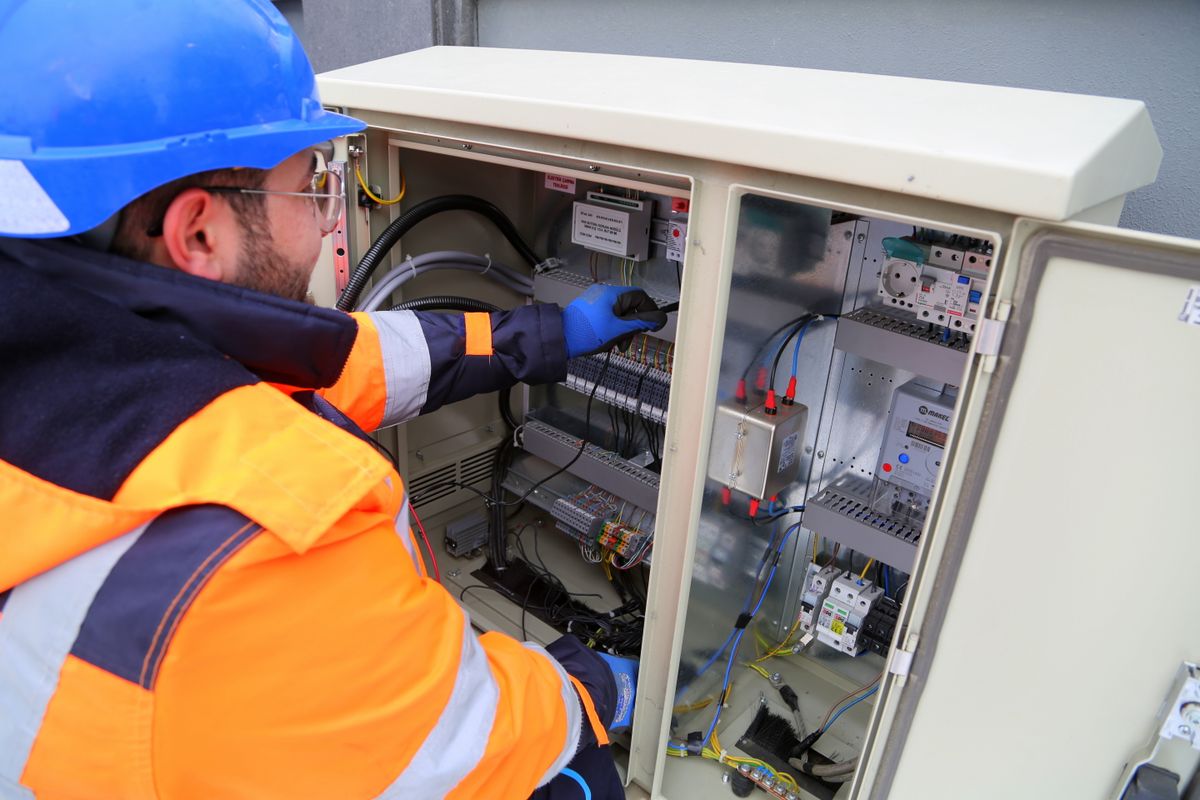
| No sound at all, breaker on | Burnt switch contacts, a failed control box, or a wiring fault. |
| Breaker trips immediately | A short somewhere: control box, cable or motor. |
| Scorch marks or burning smell | Power off, leave it off, and call. |
A surge usually damages the cheapest, most exposed components first — switch and control box above ground — before the pump down the well. That is why testing from the surface comes before any talk of replacing the pump. Lightning in particular is covered in lightning damage to well pumps.
Winter outages: one more possibility
If the power was out during a hard freeze, exposed pipe at the wellhead, in a well house or in a crawlspace may have frozen while the heat was off. The pump runs but nothing arrives, or the switch never sees pressure. See frozen well pump for how to thaw it safely.
Next time: be ready
- Fill containers before a forecast storm. A bathtub of water for flushing saves draining the pressure tank to zero.
- Go easy on water during the outage. Keeping some pressure in the tank avoids the lockout.
- Know where the breaker is. Label it now, not by torchlight.
- Consider a generator connection. Sized correctly, with a transfer switch or interlock. See generator sizing for a well pump.
- Ask about surge protection for the pump circuit.
Where we work
After-storm well service across Upstate South Carolina
| ✓Anderson | ✓Greer |
| ✓Taylors | ✓Mauldin |
| ✓Simpsonville | ✓Fountain Inn |
| ✓Travelers Rest | ✓Easley |
What to remember
| 1 | Breaker first, once. If it trips again, stop resetting. |
| 2 | Gauge at zero plus a lever means lockout. Lift and hold with the cover on. |
| 3 | Jet pumps may need priming. Submersibles never do. |
| 4 | Storm outage? Suspect the surface parts. Switch and control box fail before the pump. |
| 5 | Save water during the outage. Keeping pressure up avoids the lockout entirely. |
Frequently asked questions
Why is my well pump not working after the power came back on?
Most often the breaker tripped when power returned, the pressure switch locked out because pressure dropped too low during the outage, or a jet pump lost its prime. Surge damage to the switch or control box is the next most likely cause.
How do I reset my well pump after a power outage?
Reset the breaker once. If the pressure gauge reads near zero and the switch has a side lever, lift and hold the lever with the cover on until pressure passes about 40 psi. If the pump does not start, or the breaker trips again, stop and call for help.
What is the lever on my well pressure switch?
It is a low-pressure cut-off. If system pressure falls below about 20 psi, the switch locks the pump out to protect it from running dry. Lifting the lever manually overrides the lockout so pressure can rebuild.
Can a power outage damage a well pump?
The outage itself rarely does, but the surge that can accompany a storm, or the spike when power returns, can damage the pressure switch, control box or motor.
Do I need to prime my well pump after a power outage?
Only if you have a jet pump and it has lost prime. Submersible pumps sit in the water and never need priming.
Why does my pump run but no water comes out after an outage?
A jet pump may have lost prime, pipes may have frozen during a winter outage, or water drained back through a leaking check valve. If it continues for more than a minute or two, turn it off to prevent damage.
How can I keep water during a power outage?
Store water ahead of forecast storms, use it sparingly to keep some pressure in the tank, and consider a properly sized generator connected through a transfer switch or interlock.
Power back but no water?
We will get it running again
Tell us what the pressure gauge reads and whether the breaker holds. We will talk you through a lockout reset on the phone if that is all it is, and come out if it is not — with a fixed price in writing first.
Open 7am–9pm, seven days · No call-out fee with a repair · Fixed price agreed in writing
See emergency well pump repair, or read what to do before help arrives if it is after hours.