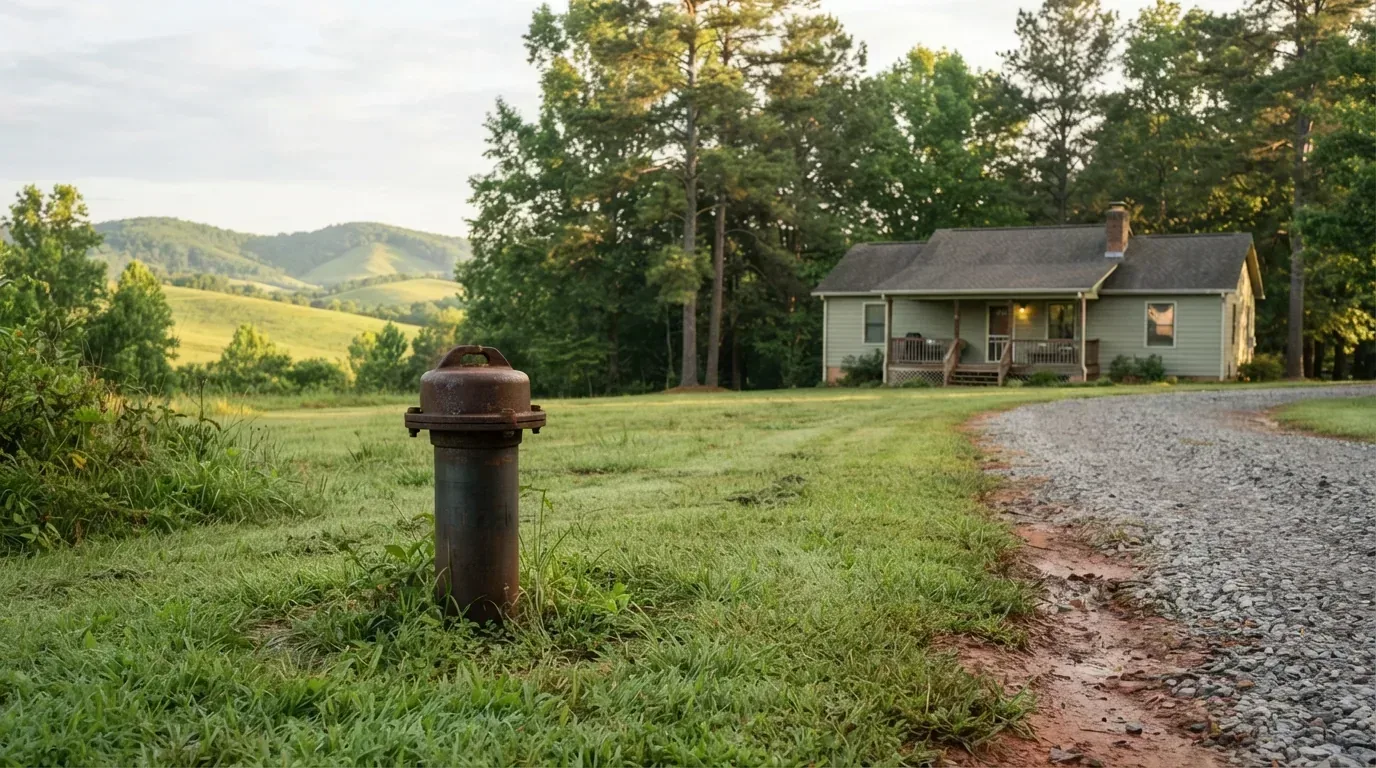

Roughly one in ten South Carolina households draws its water from a private well rather than a municipal supply, and in the rural parts of the Upstate that proportion is far higher. On some roads outside Fountain Inn or north of Travelers Rest, it is almost everyone.
What surprises people is how much wells vary across a fairly small area. Drive forty minutes from Anderson to the northern foothills and you pass through granite, saprolite, farmland and suburban clay — and the wells drilled into each behave completely differently.
This matters practically. It changes which faults you are likely to see, how much a repair costs, and how quickly a dry summer affects you.
The geology underneath, in plain terms
Almost all of the Upstate sits on the Piedmont — ancient crystalline bedrock overlaid by a weathered layer called saprolite. That single fact explains most of what follows.
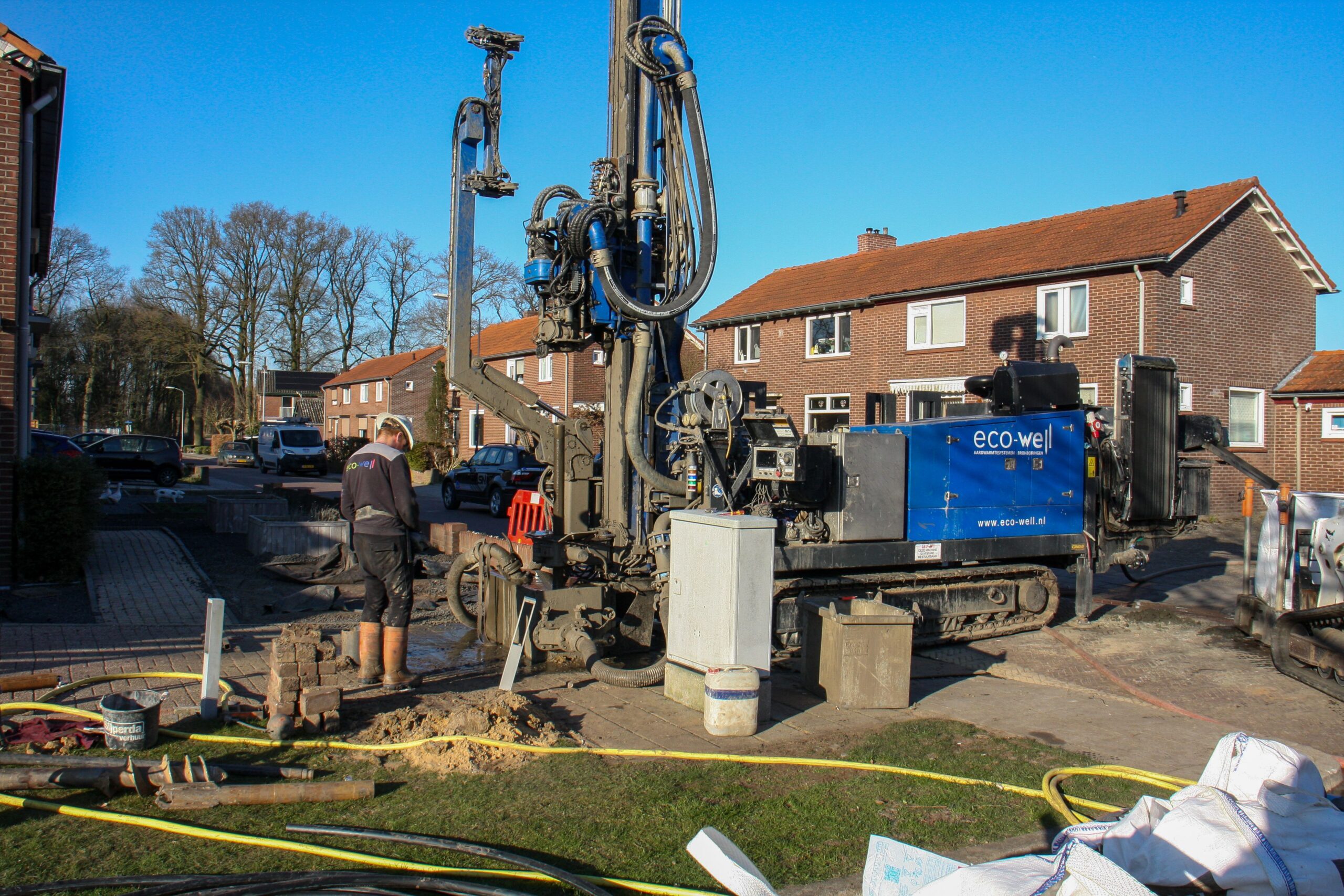
Unlike the sandy aquifers of the Lowcountry, Piedmont bedrock holds very little water in the rock itself. Water sits in fractures — cracks running through the granite and gneiss. A well here works by intersecting enough of those fractures to supply a household.
Three consequences follow, and they explain a great deal:
- Yields vary enormously between neighbours. One property hits a productive fracture at 180 feet; the house next door drills to 400 and gets less. There is no “standard depth” here, whatever anyone tells you.
- Recovery rate matters more than depth. A fractured-rock well refills at the speed water moves through those cracks. Heavy simultaneous use can outrun it even when the well is perfectly healthy.
- Seasonal swing is real. Fracture systems respond to rainfall faster than deep sandy aquifers do, which is why late-summer complaints follow a dry spring so reliably here.
What that means county by county
The same geology behaves differently depending on where you sit in it. These are the patterns we see repeatedly.
Anderson County — deeper wells, higher stakes on diagnosis
Wells here commonly run deeper than in the suburbs, and around the lake there are still older jet pump systems in service. The practical consequence is that pulling a pump costs real money, so getting the diagnosis right before touching the well cap matters more than almost anywhere. See well pump repair in Anderson.
Greer — old farm wells under new houses
Greer has been building across two county lines for two decades. What that leaves is a lot of original farm wells now serving modern houses, with tanks and switches never resized for the demand. The fault is frequently sizing rather than failure. More on Greer well systems.
Taylors — elevation, not equipment
Higher ground north-east of Greenville. Every ten feet of rise costs roughly 4.3 PSI at the fixture, which is why “fine downstairs, weak upstairs” is the standard Taylors complaint. Usually a switch setting rather than a broken part. See Taylors.
Mauldin — the minority on a well
Municipal water reaches nearly all of Mauldin, so the homes still on wells are unusual. That has a side effect: there is no neighbour to compare notes with, and general plumbers see these systems rarely. Second opinions matter here. See Mauldin.
Simpsonville and the Golden Strip — demand, not capacity
Large houses, irrigation systems, and pressure tanks sized for something much smaller. Pressure collapses at breakfast and recovers by mid-morning. Nothing is broken; the buffer is too small. See Simpsonville.
Fountain Inn — wells that do more than supply a house
Farmland running toward Laurens County, where a single well often feeds the house, the barn, the troughs and the stock. Far more running hours, and long buried lines where a leak can hide for months. See Fountain Inn.
Travelers Rest and the foothills — no fallback
Approaching the Blue Ridge escarpment the rock gets harder and the drilling goes deeper. Almost everyone is on a well, and there is no city main to switch to when one stops. Access matters too — a long gravel drive changes the job if equipment has to reach the well head. See Travelers Rest.
Easley and Pickens County — different paperwork
Easley sits in Pickens County rather than Greenville, which means well permits and drilling records are held by a different county office. On an older property that is where the original depth and construction details will be, if they exist at all. See Easley.
The dry-summer pattern
Every year we take a run of calls between late July and September that follow the same script: the water has started spitting air, or gone slightly sandy, or the pressure fades after a few minutes of running.
In fractured-rock wells this is usually the water level dropping toward the pump intake after a dry spell, rather than a pump fault. The well is not “drying up” in the way people fear — it is drawing down faster than it recovers.
The important part: the pump is usually fine at that point, but running it on air will finish it. If you are getting air from the taps, switch the pump off rather than waiting to see whether it clears. That single decision is the difference between a callout and a replacement.
Properties on higher ground see this first, because the water level has less margin above the intake to begin with.
Iron, sediment and what Upstate groundwater does to equipment
Piedmont groundwater commonly carries iron and fine sediment. Neither is dangerous, but both are hard on hardware.
- Pressure tank bladders wear faster. Manufacturer service-life figures assume clean water. Here, tanks routinely fail earlier.
- Sediment filters clog more often. A slowly clogging filter is one of the most common causes of gradually worsening pressure.
- Staining on fixtures is usually iron rather than anything harmful, and it is a filtration question rather than a pump one.
- Sulphur smell comes from bacteria in the well, not from the pump.
None of that shortens a pump’s life directly. What shortens it is the tank failing quietly and leaving the pump to short cycle for months — which is worth understanding in detail, because it is the most preventable expensive fault there is. See why a pump keeps turning on and off.
Four things worth knowing about your own well
Most homeowners who bought a property with a well already on it know none of these. Finding them out takes one afternoon and saves guesswork later.
| 1 | Where the well head actually is. On a lot of properties it has been landscaped over or built around. Knowing where it sits saves time on every future visit. |
| 2 | Roughly how deep it is. County records hold this for permitted wells. It decides what any future pump job costs. |
| 3 | Which breaker is the pump. Label it. When you have no water at ten at night, this is the first thing anyone will ask you to check. |
| 4 | What the pressure gauge normally reads. Look at it once while everything is working. Then you will recognise abnormal when it happens. |
Testing your water
Private wells are not regulated the way municipal supplies are. Nobody tests your water but you.
The general guidance for private wells is an annual test for bacteria and nitrates, and a broader test every few years or after any change in taste, smell or clarity. It is also worth testing after well work, after flooding, and before a baby joins the household.
Your county environmental health office can point you to certified laboratories. This is a water quality question rather than a pump question — we repair the equipment, not the chemistry — but it belongs on the list of things well owners should know.
Frequently asked questions
How deep are wells in Upstate South Carolina?
There is no standard. Piedmont wells depend on where the water-bearing fractures are, so depths vary widely even between neighbouring properties. County permit records hold the figure for your specific well where one was filed.
Why does my well water get worse in late summer?
Fractured-rock wells draw down faster than they recover during a dry spell, so the water level drops toward the pump intake. Air in the taps or a sandy tinge is the usual sign. Switch the pump off rather than running it on air.
Is Upstate well water hard?
Usually not. Groundwater from the Upstate’s crystalline rock tends to be soft and often slightly acidic, though iron and fine sediment are common. Both wear pressure tank bladders and clog filters faster than clean water does.
How often should I have my well water tested?
Annually for bacteria and nitrates is the usual guidance for private wells, with a broader test every few years or whenever the taste, smell or appearance changes.
Who holds the records for my well?
The county the property sits in. Easley and the surrounding area fall under Pickens County; most of the rest of our service area is Greenville County, with parts of Greer in Spartanburg and land south of Fountain Inn in Laurens.
Do I need a water softener on a well in the Upstate?
Not always. Iron filtration is more commonly the need here than softening. Testing tells you which, and it is worth knowing before buying equipment.
My neighbour’s well is fine and mine is not. How?
Entirely normal in fractured bedrock. Two wells a few hundred feet apart can intersect completely different fracture systems at different depths, with different yields.
Well pump repair across the Upstate
We know what your area’s wells do
Anderson to Travelers Rest, Easley to Fountain Inn — the systems are different in each, and so is what usually fails. We test the whole system before quoting anything.
Open 7am–9pm, seven days · No call-out fee with a repair · Fixed price agreed in writing
Find your town on the areas we cover, or see everything we handle on our services page. If something is wrong right now, start with what to check before you call or why your pressure is low.