
Well Pump Repair in Fountain Inn, SC
Fountain Inn and the countryside around it is proper well territory — acreage, outbuildings and systems that work harder than a suburban pump ever does. We’re about twenty-five minutes out.
- About 25 minutes away
- Open 7am–9pm, seven days
- Licensed & insured
Get a Free Quote
Rather not call? Send this and we’ll get back to you fast.
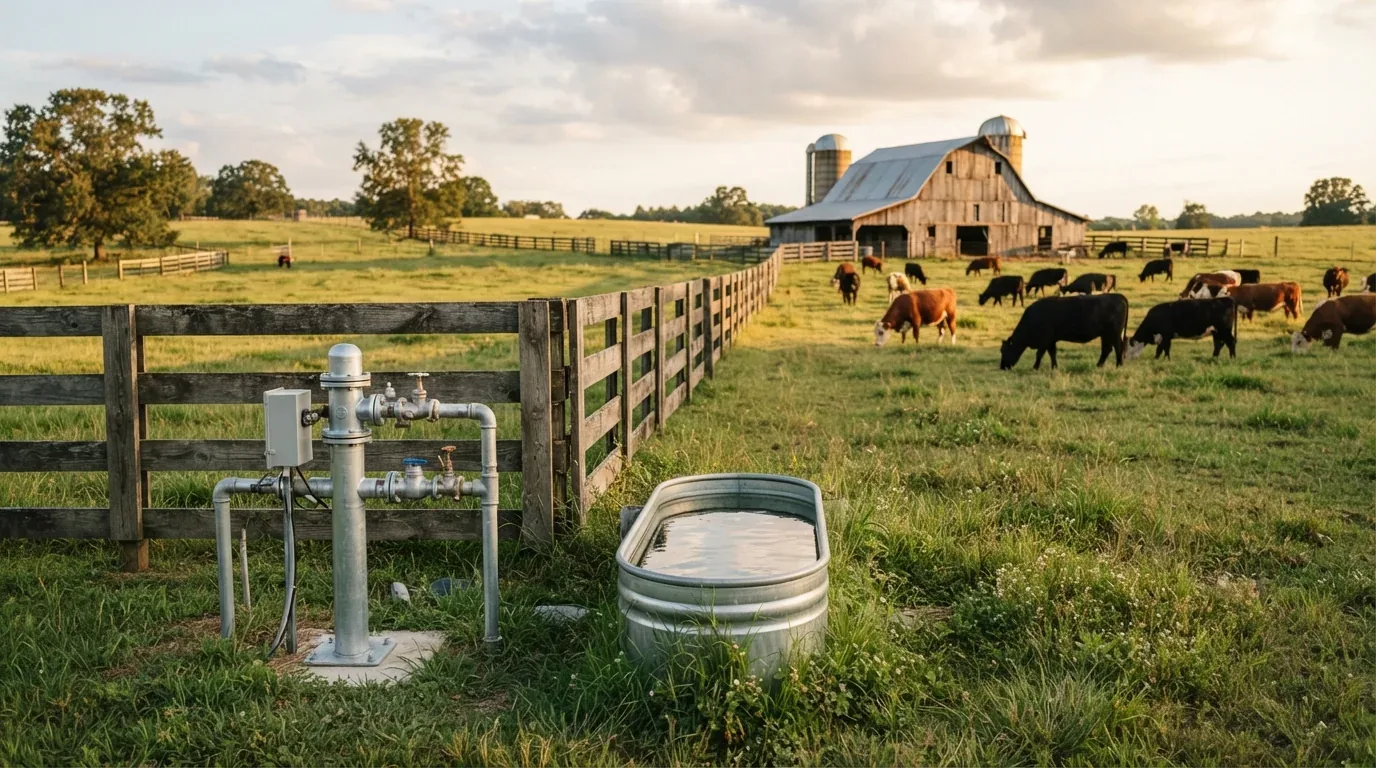
Wells That Do More Than Supply a House
Fountain Inn sits where suburban Greenville County gives way to farmland, running down toward Laurens County. A lot of the wells here aren’t just supplying a kitchen and two bathrooms — they’re watering livestock, filling troughs, running outbuildings and irrigating.
A working well fails differently from a domestic one:
- Far more running hours. More starts, more wear, and a pump that reaches the end of its life years sooner.
- Demand spikes are brutal. Filling a trough or running a hose line for an hour is a very different load from a shower.
- A failure stops more than the household. Livestock without water is an urgent problem, not an inconvenience.
- Long runs of buried pipe. More line between the well and the point of use means more places for a leak to hide.
- Pressure tanks take a beating. Heavy cyclical demand is exactly what shortens tank life, and a failing tank is what kills pumps.
What's Happening at Your Tap Right Now?
On a working property the well feeds more than taps, so the first question is always where the problem shows — at the house, at the barn, or everywhere. That narrows it fast.
No water at all
House and outbuildings both dry means the fault is at the source — breaker, capacitor, control box or the pump itself. If it’s only the barn, the problem is out on the line instead, and that’s a very different job.
The pump runs but pressure is fine
On a property with long buried runs to barns and troughs, this usually means a leak out on the line rather than a pump fault. Nothing shows on the surface, but the pump runs day and night and the ground stays soft somewhere.
Pressure gone at the barn or trough
Filling a trough is a sustained heavy draw, and it will expose a tank or switch that household use never troubled. If pressure holds indoors but dies at the far end of the property, the line or the sizing is the issue — not the motor.
Pump clicks on and off every few seconds
Short cycling, and on a working well it happens faster than anywhere. Livestock and outbuildings draw in heavy bursts all day, so the tank empties and refills constantly — wearing the motor every cycle.
Pump runs constantly or won’t shut off
The pump never reaches its cut-out pressure. A stuck pressure switch, a leak on the supply line, or a pump that can no longer build pressure. It burns power the whole time.
Breaker keeps tripping
An electrical fault. On farm properties the cable often runs a long way and has been in the ground for decades, so damaged cable is as likely as a failed capacitor. Leave the breaker off — livestock or not, resetting it makes things worse.
Well Pump Services in Fountain Inn
All of this is work we carry out across Fountain Inn and the countryside either side of the Laurens County line, on submersible and jet systems of any age or brand. Follow any service for the full detail.
Well Pump Repair
We map what the well actually supplies before testing anything. On a Fountain Inn property that often turns up a line or a fitting nobody remembered was there.
Well Pump Replacement
Sized for everything the well runs — house, stock, outbuildings and hose lines — because a pump specified for a house alone will wear out early doing farm work.
Pressure Tank Service
Heavy cyclical demand is exactly what shortens tank life. A correctly sized tank absorbs the burst when a trough fills, instead of leaving the pump to chase it.
Pressure Switch & Controls
The most common single failure on a working well, because it does far more cycles than a domestic one. Cheapest part on the system, and usually the reason pressure has been fading.
Emergency Repair
Late callouts for homes with no water, seven days a week. Fountain Inn is about twenty-five minutes out, and livestock can’t wait.
Flow & Pressure Testing
Readings at the well head, at the house and out at the outbuildings, to find the real restriction before anyone spends money on parts.
No Water on a Working Property?
Livestock can’t wait, and neither do we — we run no-water callouts seven days a week, 7am to 9pm. Before we arrive, stop switching the breaker on and off — repeatedly restarting a struggling motor is the fastest way to destroy it completely.
What Happens When You Call Us
No guesswork, and nothing added to the bill after the fact. The order is the same on every job, emergency or not.
STEP 01
Tell us the symptom
Tell us what the well supplies and where the water has stopped. If stock are without water, say so — that changes how we schedule the job, not just what we bring.
STEP 02
Test the whole system
Source first — switch, tank, control box, wiring — then out along the lines if the readings say the fault is downstream rather than at the well.
STEP 03
Fixed price, then repair
Written price before we start. Where stock are involved we’ll prioritise getting water flowing, then deal with anything that can safely wait.
What Changes the Cost of a Well Pump Repair
An honest number isn’t possible until someone has tested the system. On a working Fountain Inn well the biggest variable is simply how much that one pump is being asked to do.
Source fault or line fault
A switch or capacitor at the well head is a small job. A leak somewhere along a few hundred feet of buried pipe is a different one — and telling them apart is the first thing we do.
How much the well runs
A well watering stock and outbuildings does several times the running hours of a domestic one. That wear is why parts here reach the end years before the manufacturer’s figures suggest.
How much buried pipe there is
More line to the barn means more places for a leak to hide. Tracing one takes time, but it costs a fraction of replacing a pump that was only ever working too hard.
What else has failed
On a working Fountain Inn well, a failing pressure tank or a leaking buried line often turns up alongside the original fault.
Whether stock are waiting
Animals without water is urgent, and we treat it that way. A late callout costs more to run than a booked slot, but we’ll say honestly when a fault can wait until morning.
Access to the well head
On acreage the well head can be a long way from the house, and stock fencing or soft ground adds time before any repair can begin.
What we won’t do: quote a price over the phone without seeing the system, or add parts to the bill after the work is approved. If a company gives you a firm number before testing anything, ask what happens when the fault turns out to be something else.
We'd Rather Fix It Than Sell You a Pump
A well that waters stock, fills troughs and runs outbuildings does several times the work of a domestic one. It also fails differently — and the fault is frequently out on a buried line rather than at the pump at all.
So we start by working out what the well is actually feeding:
- We map the system first. House, barn, troughs, hose lines — because you can't diagnose a well without knowing what it feeds.
- Line faults found, not assumed. If the pump is healthy and a buried line is leaking, we locate it rather than selling you a motor.
- Written price, agreed first. No hourly creep, and nothing added to the bill once work is under way.
- Stock get priority. Water flowing first, then the rest of the job — and we'll tell you what can safely wait.
- Re-tested at the far end. Not just at the house — at the trough or the barn tap, where the problem actually was.
Areas We Reach Around Fountain Inn
We cover the farmland and county roads around Fountain Inn, on both the Greenville and Laurens sides of the line. Not sure you’re in range? Call and tell us your town — we’ll say straight away rather than waste your time.
- Simpsonville
- Mauldin
- Gray Court
- Woodruff
- Owings
- Laurens
- Princeton
- Ware Place
Typical Fountain Inn Well Profile
| Characteristic | What it usually means here |
|---|---|
| Setting | Rural and agricultural, on the Greenville–Laurens county edge |
| Counties | Greenville County, bordering Laurens |
| Common systems | Submersible pumps, often serving more than the house |
| Frequent complaint | Premature pump wear from heavy running hours |
| Aggravating factor | Long buried supply lines where leaks stay hidden |
Not sure it’s the pump? Most of the callouts we take turn out to be a switch, pressure tank or wiring fault rather than a dead pump. We test the whole system before quoting, so you don’t end up paying for a replacement you never needed.
Fountain Inn Well Pump FAQs
It changes how hard the pump works and how quickly it wears. It also makes a failure urgent, so tell us when you call. See flow and pressure testing.
Often a leak somewhere on a long buried line rather than a pump fault. Worth finding before it undermines something.
Yes, the countryside around Fountain Inn crosses the line and we work both sides of it. For homes with no water at all we run emergency callouts seven days a week, 7am to 9pm.
It depends whether the fault is at the well head or out on a line. A switch or capacitor is a small job; tracing and repairing a few hundred feet of buried pipe is a bigger one. We test first, then give you a fixed price in writing.
That points at the line rather than the pump — a leak, a failed valve or a blockage somewhere on the run out to the outbuilding. The pump is doing its job; the water isn’t reaching the far end. See flow and pressure testing.
A sustained draw like filling a trough can pull the water level down toward the pump intake, especially late in a dry summer. Air at the taps means the pump is close to running dry, so switch it off rather than pushing through it. Levels usually recover once the well has had time to rest.
Because it’s doing several times the work. A well watering stock and outbuildings cycles far more than a domestic one, and every cycle is wear. A correctly sized pressure tank absorbs those bursts instead of leaving the pump to chase them — see pressure tank service.
No — and we understand the pressure you’re under. Each reset drives more current through the fault and risks turning a repair into a replacement, leaving you worse off. Leave it off, haul water for the short term, and call.
Yes. It’s one of the most common faults we find on Fountain Inn properties — a pump running constantly because water is escaping somewhere along a run nobody can see. We work on any age and brand of system, including other companies’ installs.
Usually not on its own. Pressure is set by the switch, not by horsepower, and a bigger pump feeding an undersized tank still cycles hard. On a working well the tank sizing and the condition of the lines matter far more.
No call-out fee when you go ahead with the repair, on either side of the Laurens County line. The written price you approve is the price — nothing added for travel out to the property.
Less than the eight to fifteen years quoted for domestic systems, simply because it runs far more. Correct tank sizing is the single best thing you can do to extend it — it cuts the number of cycles the motor has to make.
No water on a working property?
Tell us what the well supplies as well as what it’s doing — it changes what we bring.