
Skip links
Flow & Pressure Testing

Water Flow and Pressure Testing Before Any Parts

Weak pressure has a dozen possible causes, and most of them are not the pump. We take readings at the well head and at the tap to find the real restriction before anyone spends money on parts.

✓ Readings at well head and tap    ✓ Written findings    ✓ No parts bought on a guess

Book a Test

Rather not call? Send this and we’ll get back to you fast.

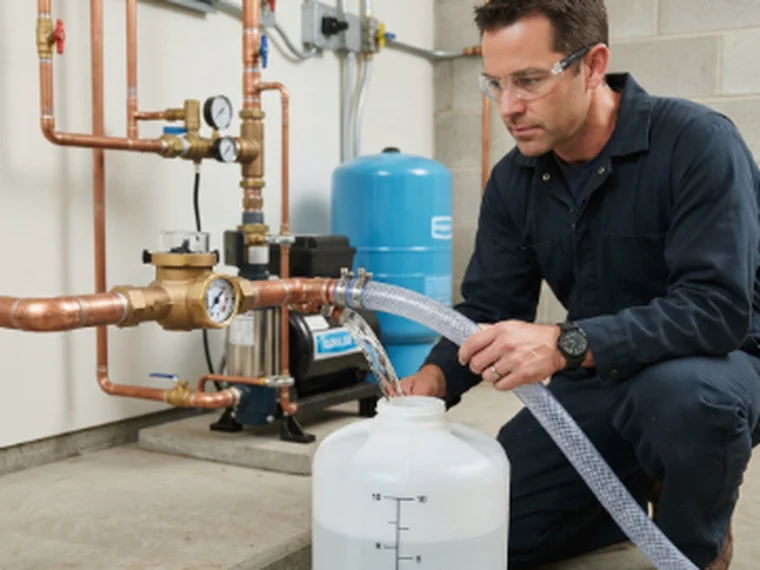
    Timed flow test being carried out on a private well system
    Test firstThen quote

    Weak pressure

    Low Pressure Is a Symptom, Not a Diagnosis

    Poor water pressure is the complaint we hear most, and the pump is rarely the culprit. Fitting a bigger pump to fix a pressure problem is one of the most expensive mistakes a homeowner can make, because it hides the real fault and wears the new pump out early.

    Testing separates the possibilities. These are the causes we find most often, and each one behaves differently on a gauge:

    • Pressure switch set too low — the cheapest possible cause, and easily missed.
    • Waterlogged pressure tank — pressure surges and drops instead of holding steady.
    • Clogged sediment filter — good pressure at the well head, poor pressure in the house.
    • Restricted or corroded pipework — pressure falls away as soon as more than one fixture runs.
    • Falling water table or clogged intake — flow rate drops off the longer the pump runs.
    • Genuine pump wear — healthy power and controls, but the output is simply no longer there.

    Only the last of those is a pump problem. That is why we measure before recommending anything.

    What We Measure

    Two readings taken in two places tell us most of what we need. The gap between them is usually where the fault lives.

    TEST 01

    Pressure at the tank

    Cut-in and cut-out figures checked against the switch settings and the tank’s air charge, so we know the controls are doing their job.

    TEST 02

    Flow rate at the source

    Measured output over a timed draw, which shows whether the pump is still delivering what it should and whether the well is recovering.

    TEST 03

    Pressure at the fixtures

    Readings at the tap with one fixture running, then several. A drop here with healthy readings at the tank points to filters or pipework.
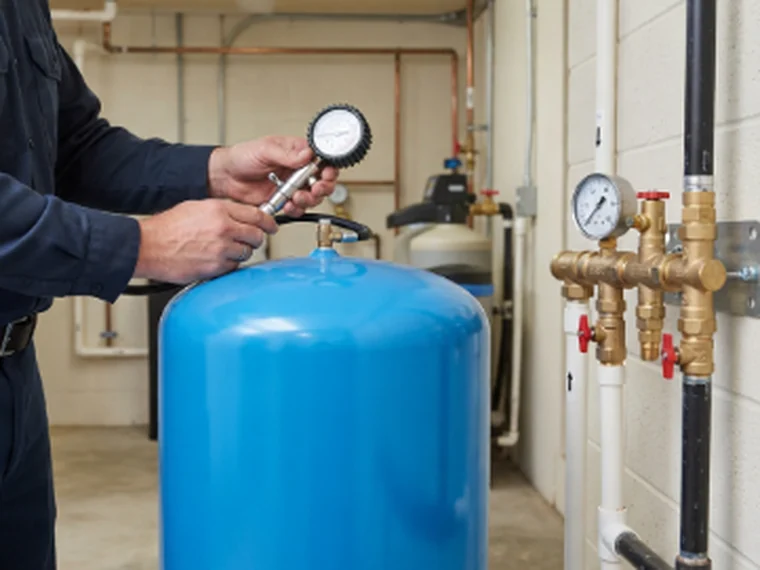
    Pressure readings taken at the tank during a flow test

    The point of it

    You Get the Findings in Writing

    A test is only worth doing if it produces a clear answer. You get the readings, what they mean, and what we would do about it, before any decision on parts.

    • The actual numbers — not just an opinion that the pressure is low.
    • The identified cause — with the reasoning, so you can see why we ruled the other possibilities out.
    • A fixed price for the fix — agreed before we start, with no parts added afterwards.
    • Re-tested after the work — the same readings taken again so you can see the difference.

    Where testing points to the tank or the controls, see pressure tank service and pressure switch repair.

    Flow and Pressure Testing FAQs

    What is normal water pressure for a private well?

    Most residential systems run somewhere between forty and sixty PSI, set by the pressure switch. What matters more than the number is whether pressure holds steady while water is running, rather than surging and dropping.

    Why is my water pressure low in only one part of the house?

    That usually rules out the pump entirely. A single weak fixture points to a blocked aerator, a partly closed valve or a restriction in that branch of the pipework rather than anything at the well.

    Will a bigger pump fix my low pressure?

    Usually not, and it often makes things worse. Pressure range is set by the switch, not the pump size. A larger pump fitted to a system with a restriction or a failing tank simply works harder and fails sooner.

    My pressure gets worse the longer a tap runs. What does that mean?

    That pattern suggests the well is not recovering fast enough, or the intake is partly clogged. It is one of the clearest cases for a timed flow test rather than guesswork.

    How long does a flow and pressure test take?

    Usually about an hour, including the timed draw. If the readings point to a straightforward fault like a switch setting or a waterlogged tank, we can often fix it on the same visit.

    Do I need a test if my pump seems to be working?

    If pressure is fine, no. If it has been slowly getting worse, testing is worth it, because gradual decline is often the first sign of a pump or a well that needs attention before it fails outright.

    Pressure getting worse?

    Let us measure it before anyone sells you a pump. Most low-pressure complaints turn out to be a cheaper fault somewhere else in the system.