Skip links
Pressure Switch & Controls

Pressure Switch and Control Box Repair

The pressure switch is the single most common failure point on a well system, and one of the cheapest to fix. If your pump will not start, will not stop, or the breaker keeps tripping, this is the first thing worth testing.

✓ Most common single fault    ✓ Often a same-visit repair    ✓ Calibrated to your system

Get a Free Quote

Rather not call? Send this and we’ll get back to you fast.

    Well pump control box opened up for pressure switch testing
    2-4 hrsTypical repair

    Start here

    The Cheapest Fault Worth Ruling Out First

    The pressure switch is a small mechanical part that tells the pump when to start and when to stop. Its contacts open and close every single cycle, thousands of times a year, so it wears out long before the pump does.

    That is good news. A switch failure produces symptoms that look exactly like a dead pump, which is why so many homeowners are quoted a replacement they never needed.

    • Pump will not start at all — burnt or pitted contacts no longer completing the circuit.
    • Pump runs and will not shut off — the switch is not reaching cut-out, often with a clogged sensing port.
    • Breaker trips when the pump starts — welded contacts, or a shorted control box component.
    • Pressure never reaches its normal range — the switch is out of calibration or the diaphragm has failed.
    • A buzzing or chattering sound at the switch — contacts arcing, which will get worse quickly.

    We test the switch, control box, capacitor and wiring together, because these faults imitate each other. Where the tank is also involved, see pressure tank service.

    What We Check on a Controls Callout

    The switch, the control box and the capacitor all sit in the same circuit, and a failure in any one of them stops the pump. Testing them as a set is what stops a repair turning into a replacement.

    Pressure switch

    Contacts inspected for pitting and welding, diaphragm tested, sensing port cleared, then cut-in and cut-out pressures set to match your tank.

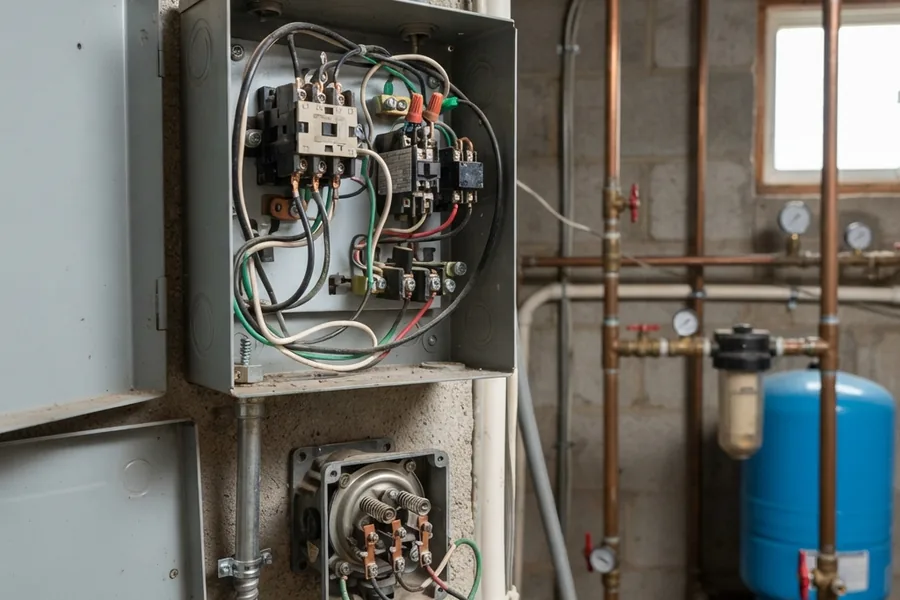
    Control box

    On submersible systems the start components live in the box above ground. Relay, capacitor and overload are tested individually.

    Start capacitor

    A failing capacitor gives you a pump that hums but will not turn. Cheap to replace, and a common cause of tripping breakers.

    Wiring and connections

    Burnt terminals, corroded splices and damaged underground cable all produce intermittent faults that look like a dying pump.
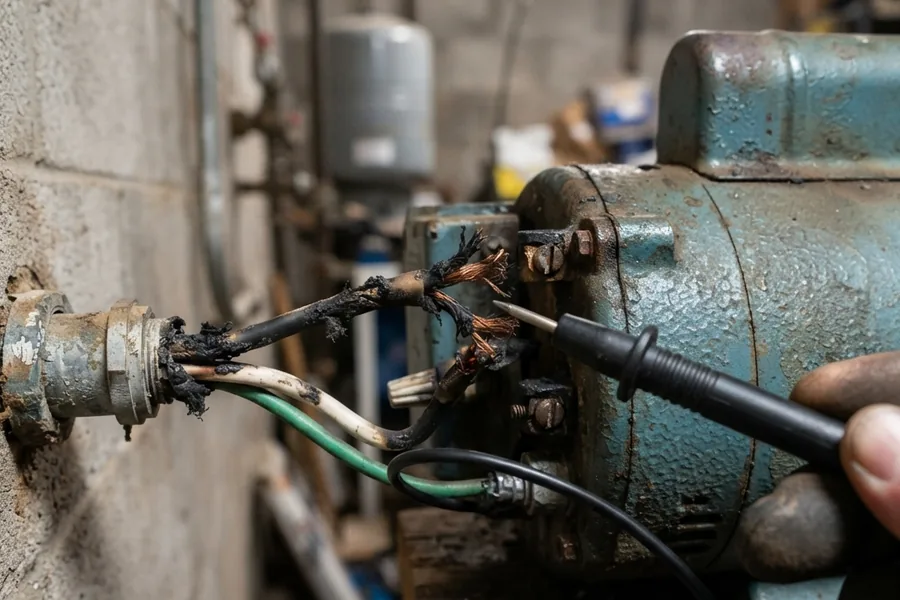
    Burnt well pump wiring tested with a multimeter

    Calibration

    Cut-In and Cut-Out, Set Properly

    Fitting a new switch is quick. Setting it correctly is what decides whether your pump runs comfortably or fights the system for the next few years.

    • Matched to the pressure tank — the tank’s air charge is set from the cut-in figure, so the two have to be adjusted as a pair.
    • Within the pump’s working range — pushing cut-out higher to chase better pressure makes the pump work harder for very little gain.
    • A sensible spread — too narrow a gap between cut-in and cut-out means more starts per day and a shorter motor life.
    • Re-tested at the tap — we check the real pressure at a fixture, not just the gauge at the tank.

    Pressure Switch FAQs

    How long does a pressure switch last?

    Typically five to ten years. The contacts open and close on every pump cycle, so a system that short cycles because of a failing tank will wear its switch out far sooner.

    Why does my pump keep tripping the breaker?

    Usually a failing start capacitor, welded switch contacts, a shorted motor winding, or damaged underground cable. It is an electrical fault, so leave the breaker off until it has been tested rather than resetting it repeatedly.

    My pump runs but never shuts off. Is that the switch?

    Often yes, either a blocked sensing port or a switch that cannot reach its cut-out setting. It can also mean a leak on the supply line or a pump that can no longer build pressure, so it needs testing rather than guessing.

    Can I replace a pressure switch myself?

    The work involves live wiring and a system under pressure, and the switch has to be calibrated against the tank afterwards. A switch fitted at the wrong settings will keep failing, so it is worth having tested properly.

    What is the difference between the pressure switch and the control box?

    The switch decides when the pump runs. The control box holds the starting components for a submersible motor. Both can stop the pump, and the symptoms look almost identical, which is why we test them together.

    Is a switch failure cheaper than a pump replacement?

    Considerably. It is one of the least expensive repairs on a well system, which is exactly why it is worth ruling out before anyone quotes you for a new pump.

    Pump not starting?

    Before anyone quotes you a new pump, let us test the switch and controls. It is the most common fault and usually the cheapest one to fix.